Generational Wealth
Wealth is composed of your assets (including home and land) and investments minus debts. What is left for the next generation after your death is referred to as Generational Wealth.
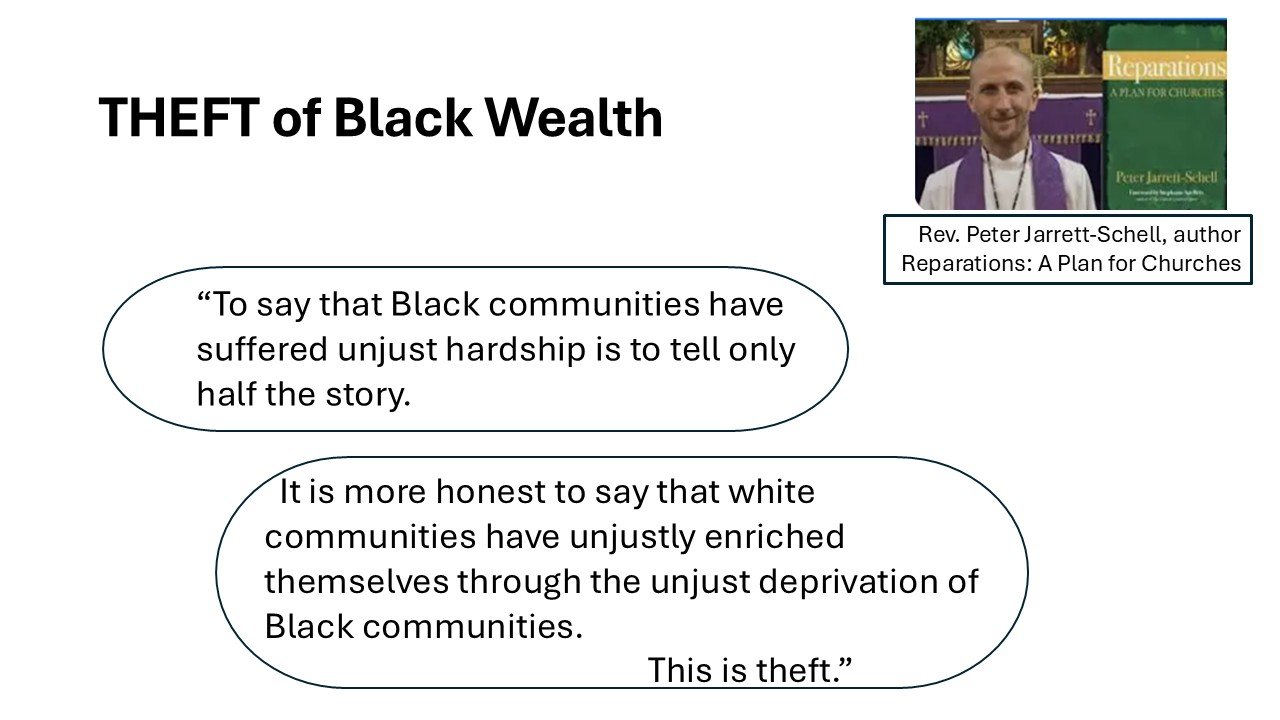
The legacies of slavery, statutory segregation and Jim Crow, and their impact on educational, employment, and housing discrimination have created a stark wealth gap in New Orleans that can be summarized in many ways. One of the most compelling and impactful is in home ownership. Fewer Blacks than Whites own their own homes, and those homes are half as valuable on average as white-owned homes. Almost 70% of Black renters in New Orleans pay more than 30% of their income for rent. These inequities diminish their potential generational wealth, family prosperity, and future opportunities. They also negatively impact neighborhoods and the city.
There were 12 generations of enslaved people in the United States from 1619 until 1865. Systemic racism as well as Jim Crow laws prevented Blacks from developing the resources that Whites had.
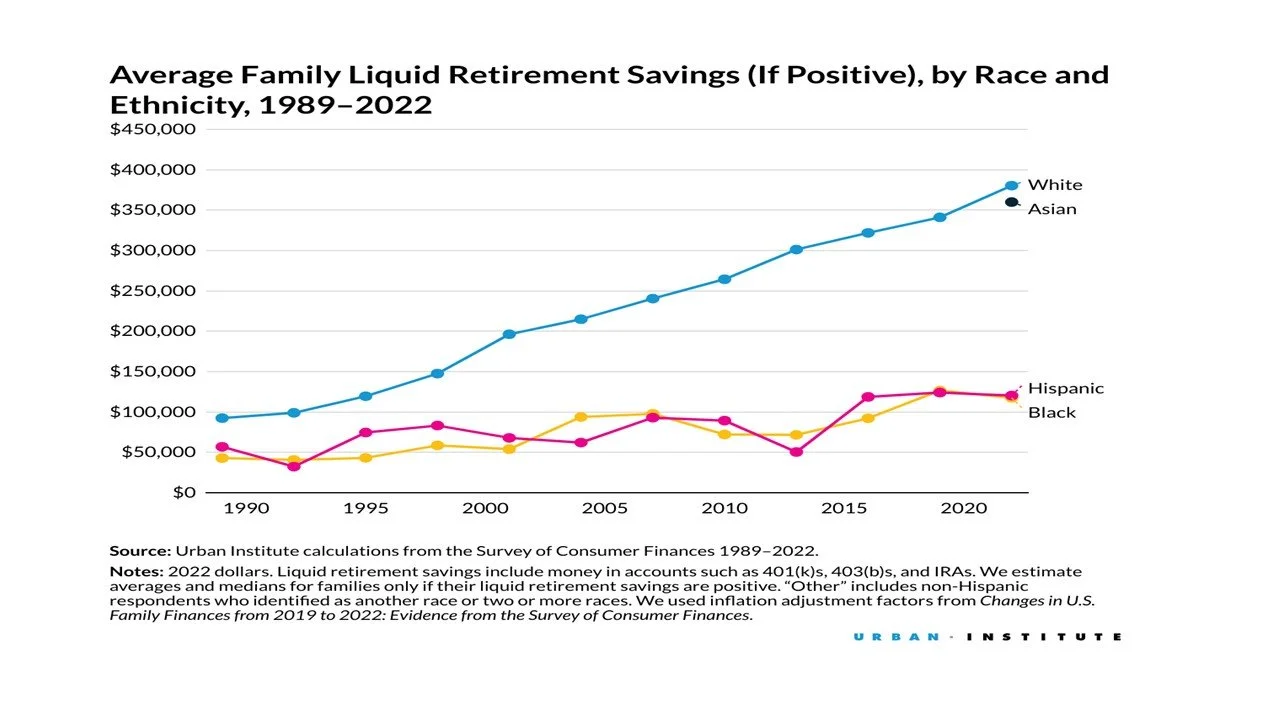
Even after the Jim Crow laws such as segregated schools, pools, libraries, restaurants, hotels and public transportation were struck down, systemic racism such as red-lining continued in Louisiana. White families were able to save and earn compounded interest for 3 centuries before Black families were able to begin. Black families will never be able to catch up, but the disparity can be reduced through reparations.
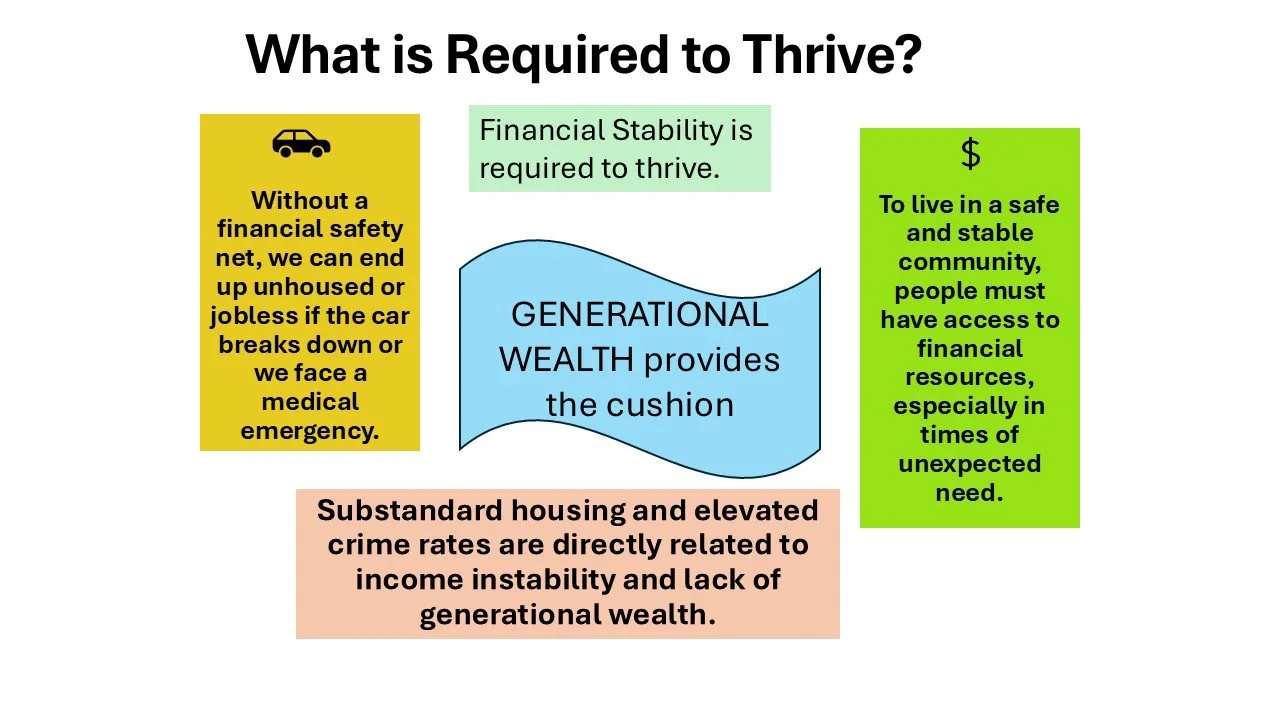
Notice in the illustration above that when individual families THRIVE, communities do also. A THRIVING neighborhood has better housing, income stability, and less crime which benefits all citizens.
Sociologist Dalton Conley has found that Black people are 66 % less likely to receive an inheritance than Whites. Sociologists Fabian Pfeffer and Alexandra Killewald have found that grandparent wealth uniquely predicts grandchild wealth, independent of parent wealth.
Why is Generational Wealth so important? Think about how you were helped as a young person when an unexpected need arose.
“An individual has not started living until he can rise above the narrow confines of his individualistic concerns to the broader concerns of all humanity.”
— Martin Luther King Jr.