
Economy
The primary reason America's social systems never produced equitable results is that from our founding documents to our current public policies, racial justice and economic equity were rarely explicit aims. Our Constitution never aimed for racial or economic equity.
Structural Racism's effect on the economy is blatant according to Joel Edward Goza. "For the wealthy, who are predominately White, radical wages and wealth were justified to incentivize work. But for disproportionately poor Black people, menial wages and scarce public assistance were justified to prevent sloth. The need to incentivize the work of the predominately White and wealthy and prevent the sloth of the disproportionately Black and poor displays how the political rationalizations linking work, rewards, and public assistance were filtered through racial lenses that corrupted our common sense." [1]
- William Darrity has concluded that the racial wealth disparity is the best single indicator of the cumulative impact of White racism over time.
-
The wealth gap is where the injustices sown in the past grow imperceptibly in the present warned Meras Baradar in The Color of Money.
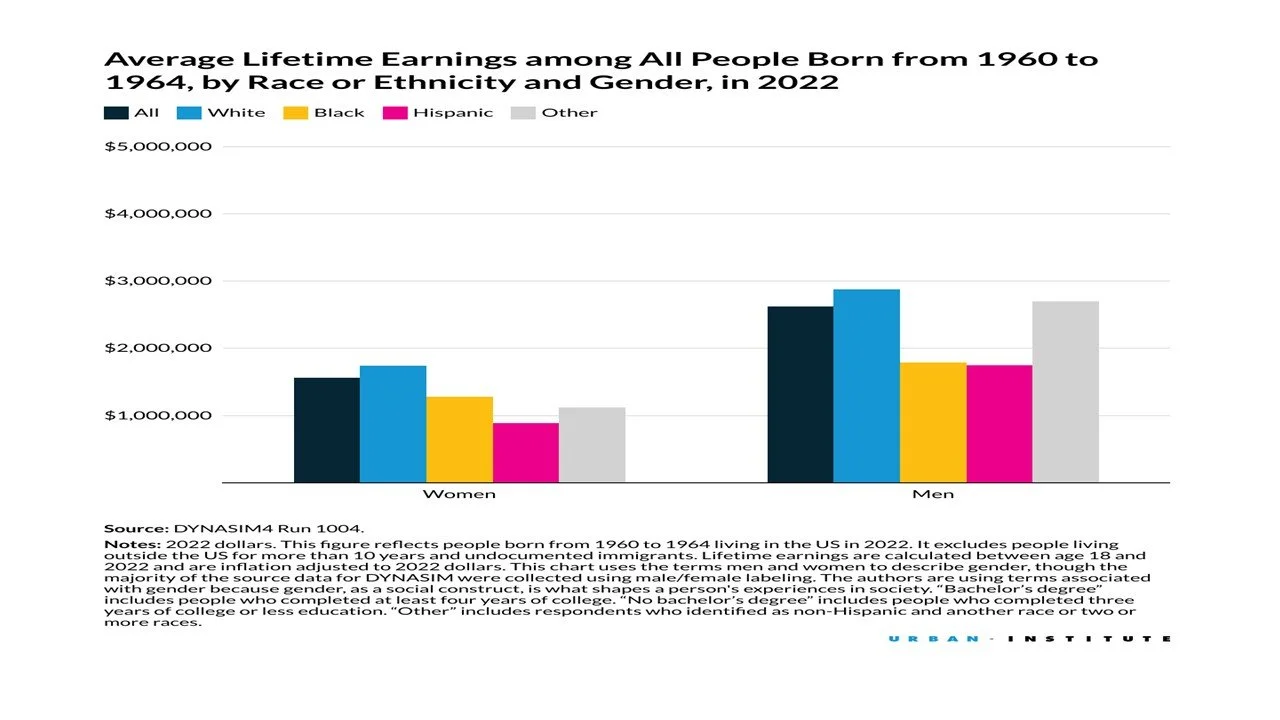
- College-educated White families nationally have on average over $300,000 more wealth than college-educated Black families according to Darrity.
This effect is especially noticeable in New Orleans:
The New Orleans poverty rate is 23.8% according to the Data Center 2020 report.
The median household income is $25,806 for Blacks compared to $64,377 for Whites.
Six times as many Black residents live in poverty as opposed to Whites in New Orleans.
In 2018, 47.1% of Blacks owned homes vs 73% of Whites in New Orleans.
The rental eviction rates were twice the national average.
The cost of housing has been affected by gentrification, urban renewal (building highways through communities and destruction of public housing), and by the increase in short-term housing.
Short-term housing for tourism increased exponentially which gentrified neighborhoods, reduced the number of properties available for residents and increased rental prices. Many of the investors who bought 85% of the properties to convert to short-term housing were from out-of-state with many living in California and New York.
“Poverty is a Policy Choice reflecting both low wages and high cost of living”
CHILD POVERTY:
Child Poverty, which is an indicator of economic stress for families and communities, is both the outcome of the occupation and education segregation that still plague us and a predictor of sub-par economic and social outcomes in the future. “In 2018, well over a million of our children were homeless. That is nearly five times the amount of the entire homeless population only forty years ago.” [2] The racial disparities in childhood poverty are stark, with Black-White child poverty rates varying in 2024 by 36-3. The wealth, educational, income, and child poverty disparities result from centuries and decades of occupational segregation, another form of Jim Crow. Even today, nationally, White people dominate the highest paying professions, and Black people are disproportionately represented in the lowest paying professions. Partly due to the nature of our tourism-based economy, these concentrations are even more pronounced in New Orleans. That is why economic disparities persist even though labor force participation is identical across races. [3]
“Overcoming poverty is not a gesture of charity. It is an act of justice.”
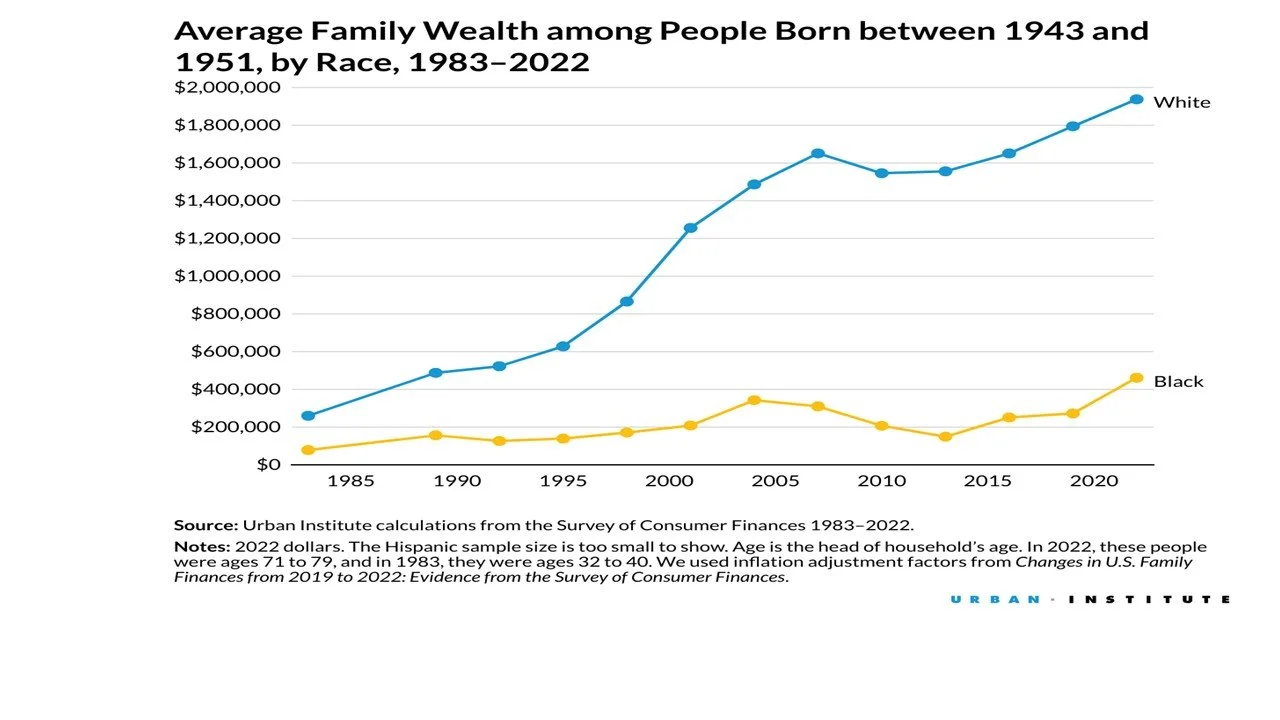
The national average family wealth in 2022 for people aged 68 to 79 was nearly 2 million for Whites, and less than $500.000 for Black Families.
Perspective is interesting.
Why do we give gifts to the wealthy and advice to the poor?