Reparations
“Our privilege is a tool that gives us access to the resources, networks, and power that we must use to create change and extend these privileges to all. We must not be blind to our privilege, but acknowledge it and wield it for justice.”
Darren Walker
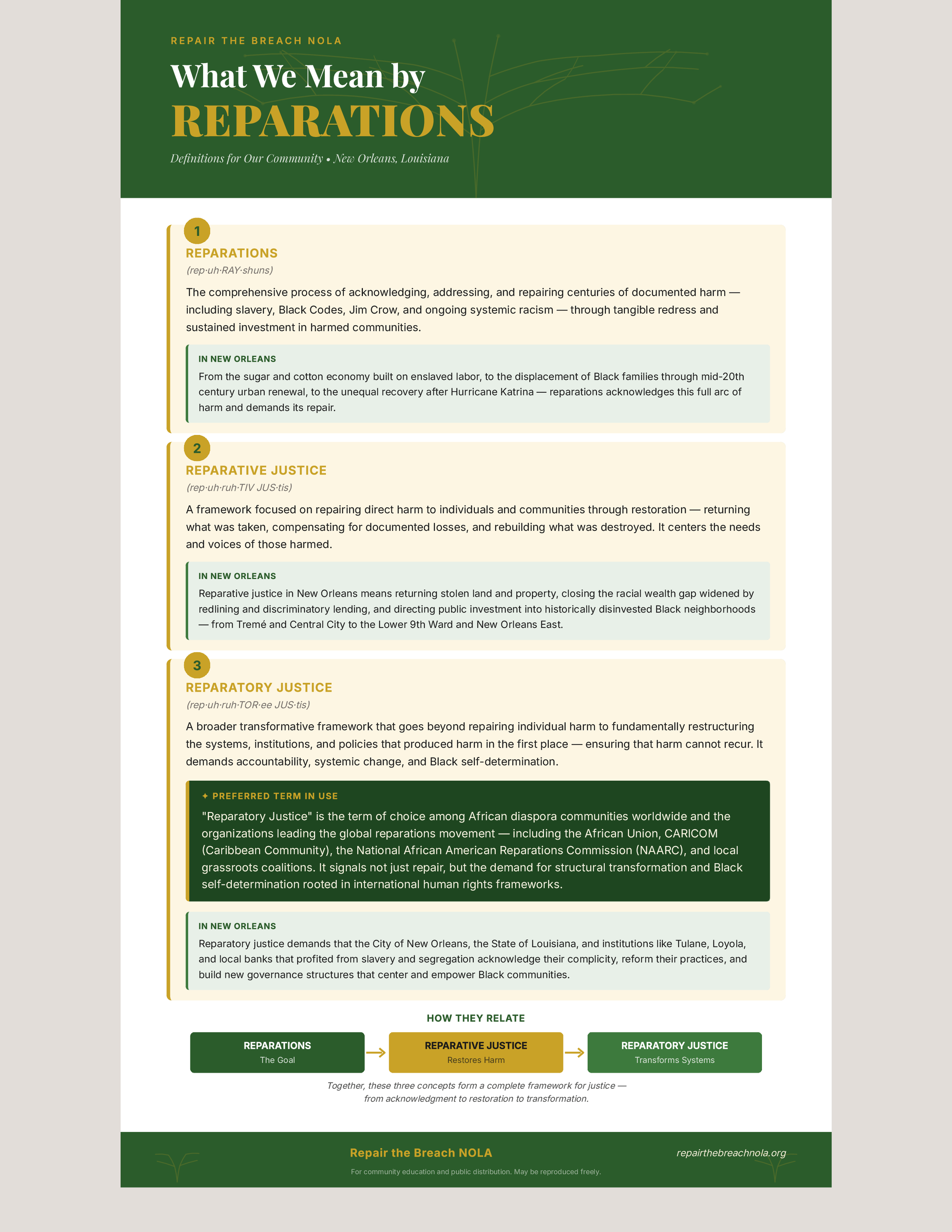
Allen J. Davis, Ed.D from the University of Massachusetts created a database listing all Reparation projects in the United States beginning in 1773. It was this listing that Repair the Breach NOLA reviewed during our weekly Contemplative Justice meetings. We investigated some of the projects, and were most inspired by the Justice League of Greater Lansing MI. We selected their model to emulate. You may be similarly inspired using this list. It is searchable by Year range, Entity type, Reparations type, Harm addressed, Legal basis, and State. It also includes Reparation Projects outside of the United States.

Slavery was the National Policy of the United States of America.
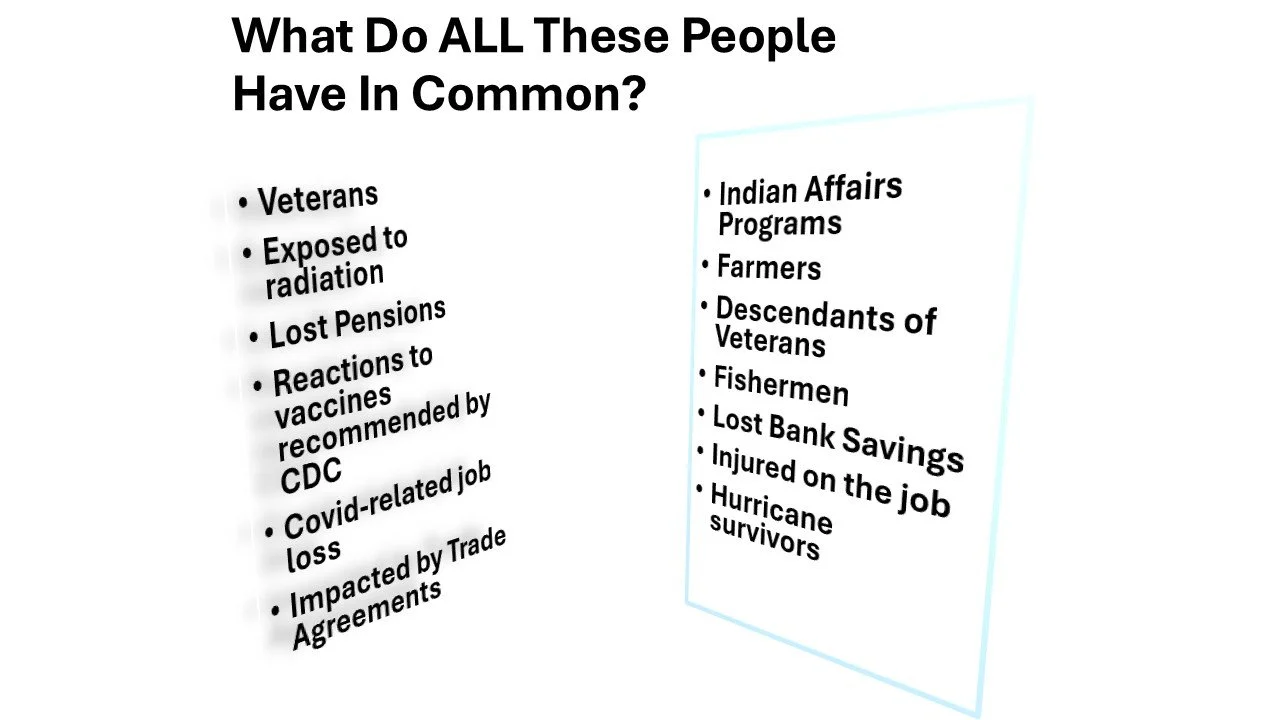
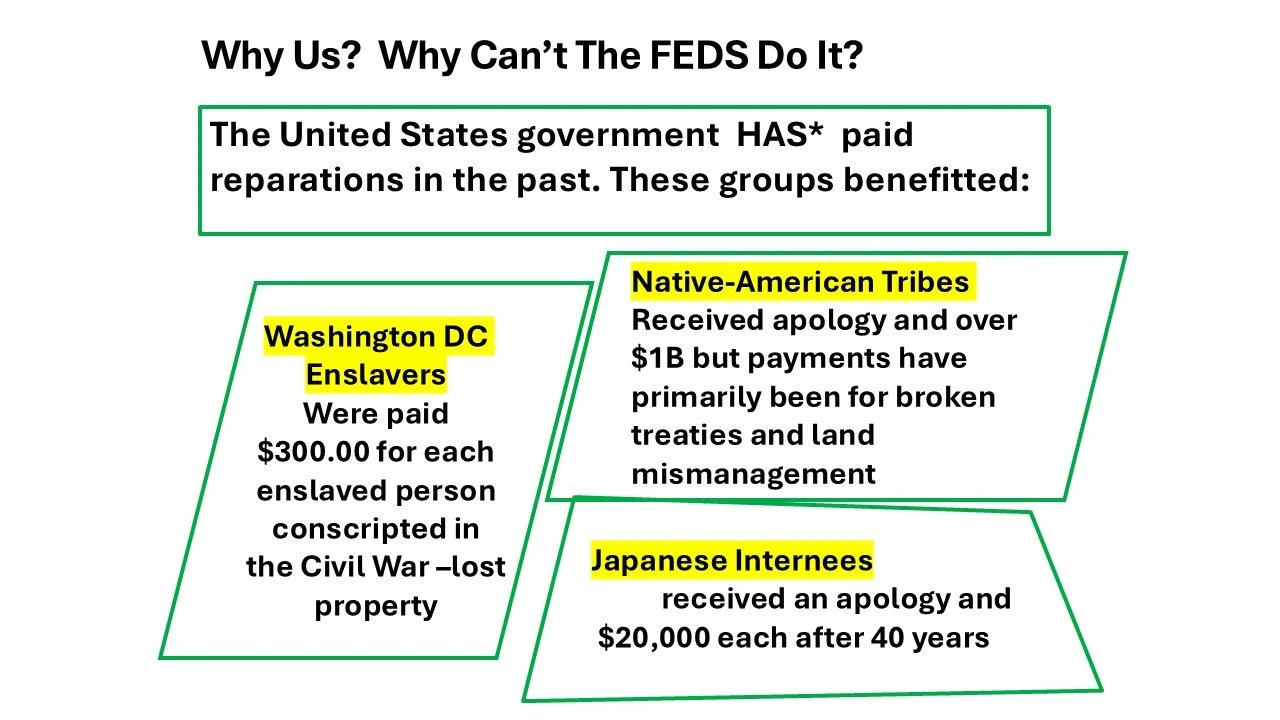
Are you aware that all of these individuals and groups of people have received reparations?
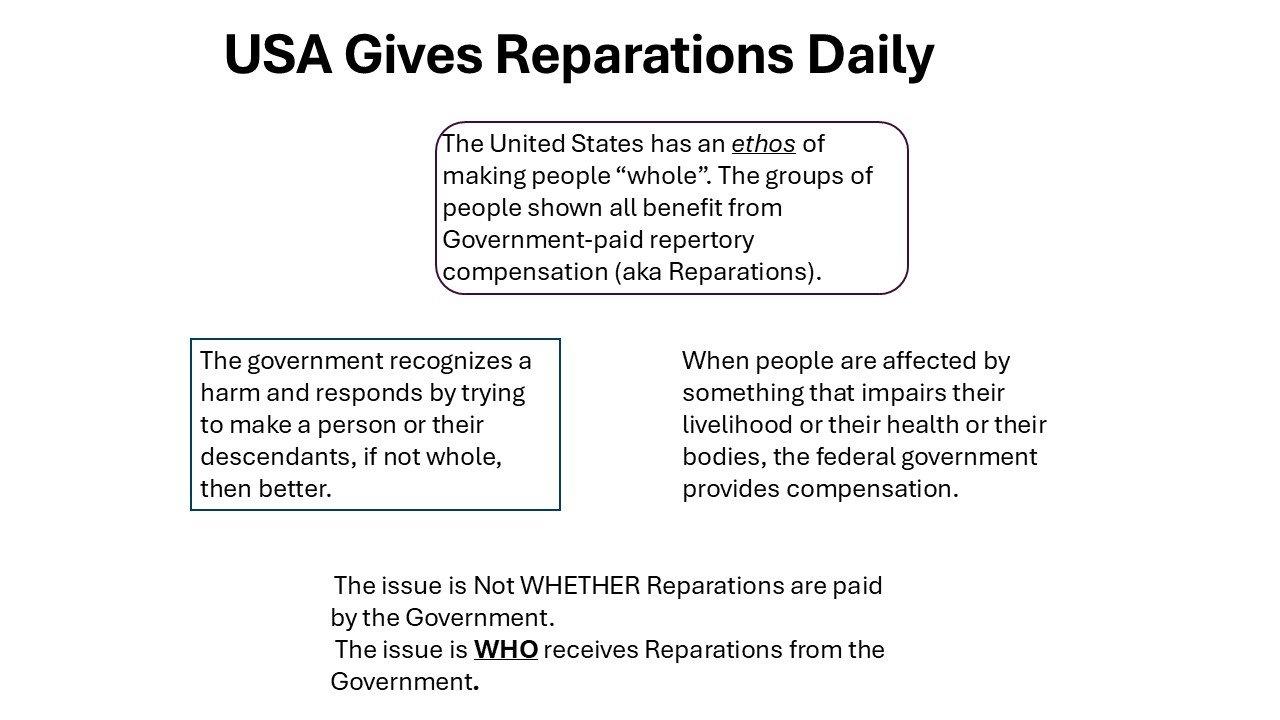
Notice that some of the programs like Indian Affairs and Veteran Affairs are inter-generational. In other words, the 2025 GI benefits include a college education for a child (or spouse) if the service member did not take advantage of that benefit.
Making that benefit retroactive would be an important Reparation benefit if your grandparent was blocked from using his educational benefit because of segregation and the lack of Black Colleges.
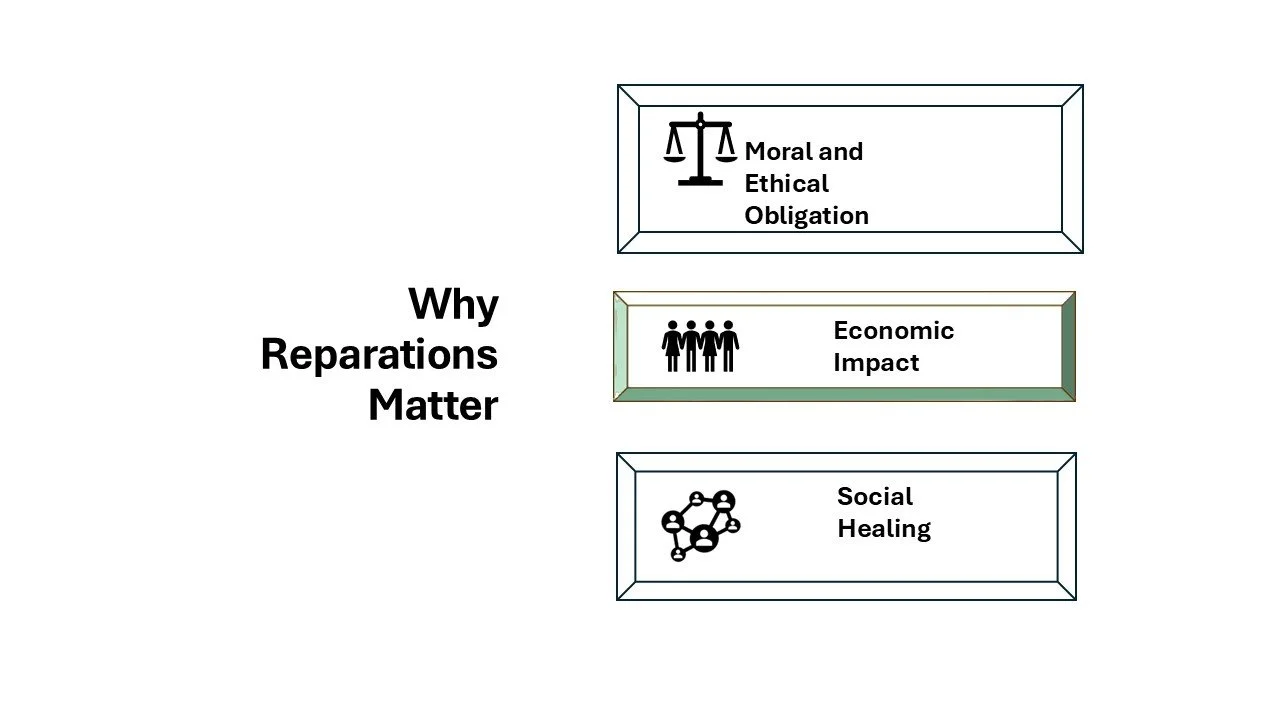
Moral and Ethical Obligation
The Image of God (Imago Dei) belief that humans are all created in the image and likeness of God and we should reflect that love is found in Islam, Judaism, and Christianity. Christians believe in the Doctrine of Repentance – turning away from sin and toward GOD as Zacchaeus modeled for us. Shalom means much more than Peace. It is rooted in the idea of wholeness, well-being. It’s about creating a world where everyone can thrive.
Economic Impact
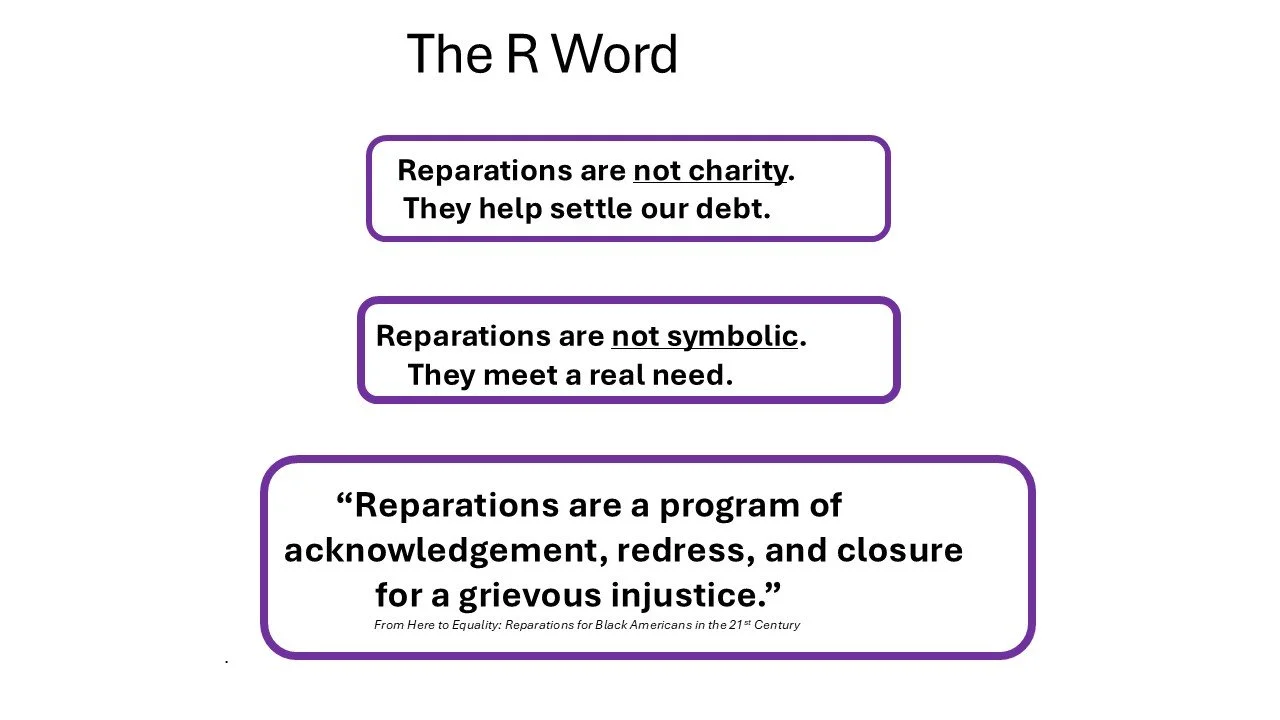
Reparations directly reduce the economic disparities and social inequalities that exist. There are also so many hidden costs it could reduce such as the billions of dollars paid each year in piecemeal programs to address poverty and inequality, like food banks, government nutrition and housing programs. According to the Poor People's Campaign, programs to address child poverty alone cost more than 1 trillion per year.
Social Healing
The complete Reparation cycle can help heal past wounds, foster social cohesion, and promote a more just and inclusive society.
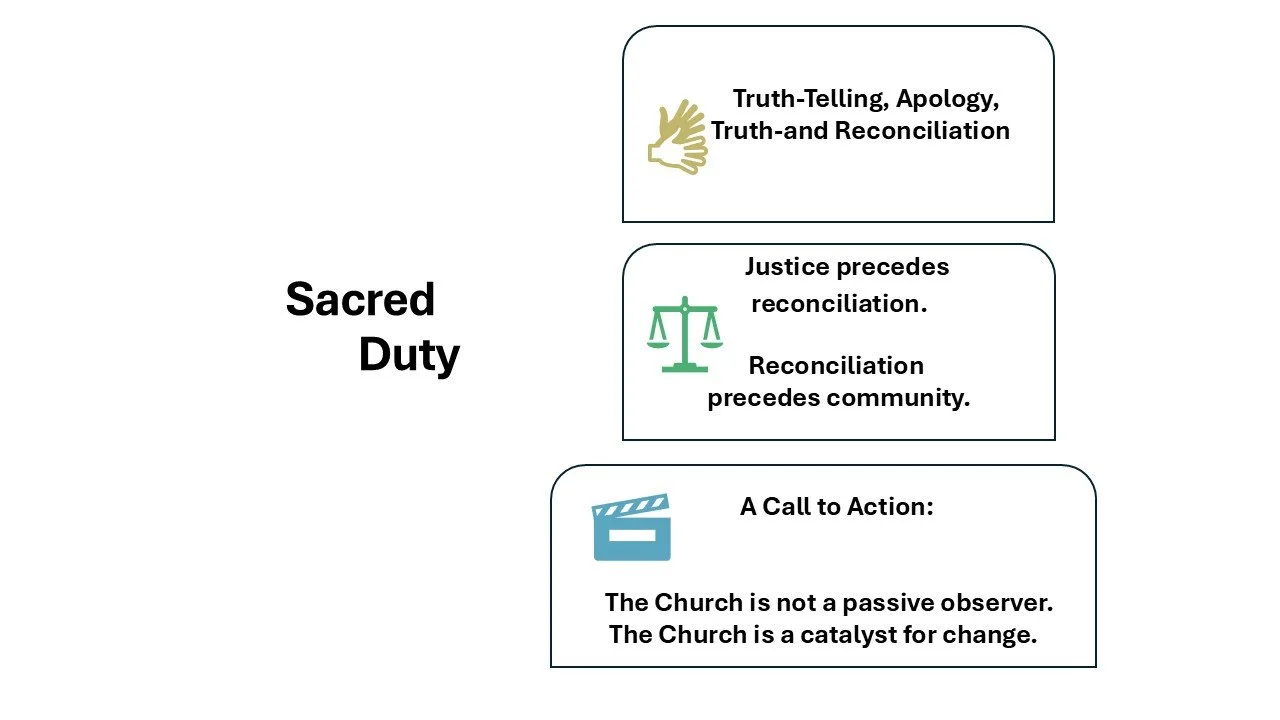
Often Whites don’t realize how important an apology is to Black people. Acknowledging the unspeakable abuse they and their ancestors underwent is very important. In fact, in racial group discussions, comments can be heard such as “I don’t care about the money; I just want an apology.” A Black pastor said: “Your white supremacy has taken my soul.”
Some people want to jump straight to relationships without the truth-telling and apology steps. One author described that as holding a housewarming before the house has even been built.
Another sensitive area is Whites expecting forgiveness and to be seen as “good white people”. As White people, we are bound to apologize, but we have no right to expect forgiveness.
How much does Justice cost?
Caroline Klam suggested that a good criterion for reparations is:
“substantial, doable, and a little bit painful.”
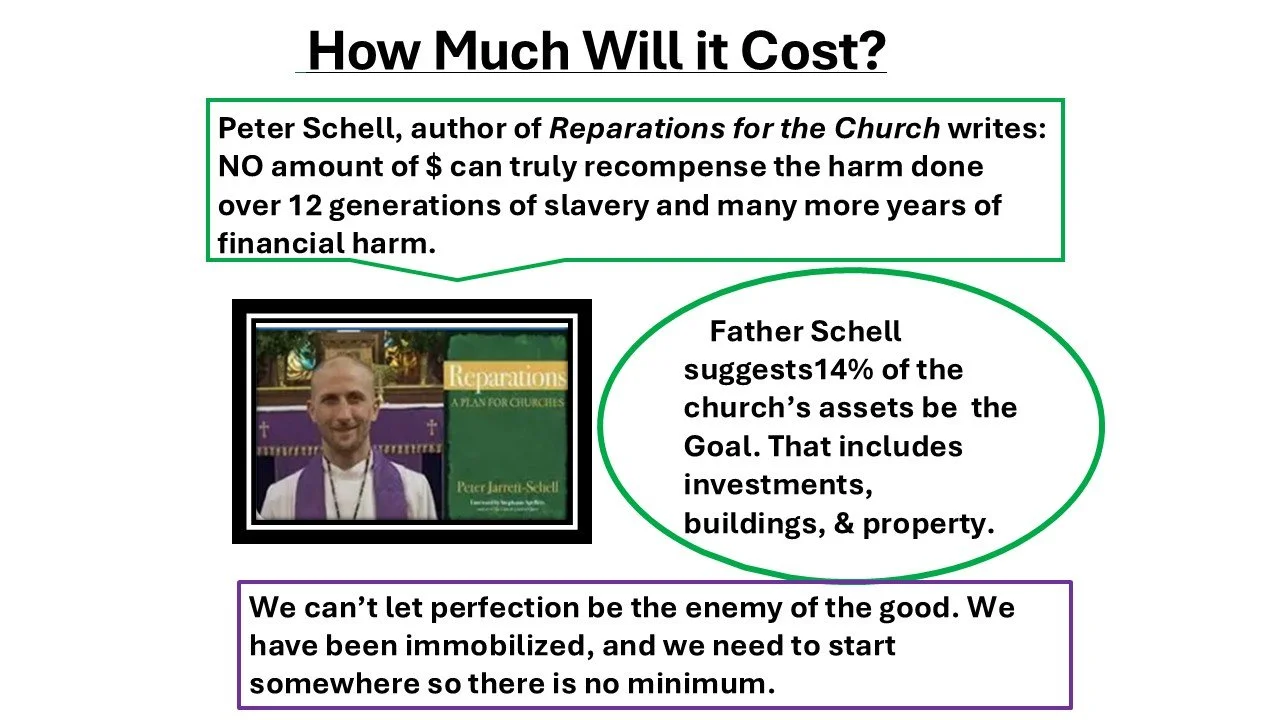
There are many ways of calculating a Reparations goal. Peter Jarrett-Schell arrived at the 14% goal by noting that Blacks are 14% of the population so they should have 14% of the generational wealth if they had equal opportunity. As we have seen, they don’t.
Reparations: Outcomes that Fuel Dreams
In New Orleans, the City Council has a Reparations Sub-Committee, but they were not responsive to the local Justice and Beyond group’s request to discuss Reparations.
Politicians react to Pressure. A grassroots strategy of pressure from local medical and non-profit organizations led City Councils to pass the first non-smoking and seat belt ordinances. As additional jurisdictions acted alone, state and federal governments felt pressured to pass workplace smoking and seat belt laws. The current national groundswell of local Reparations actions may have the same effect.
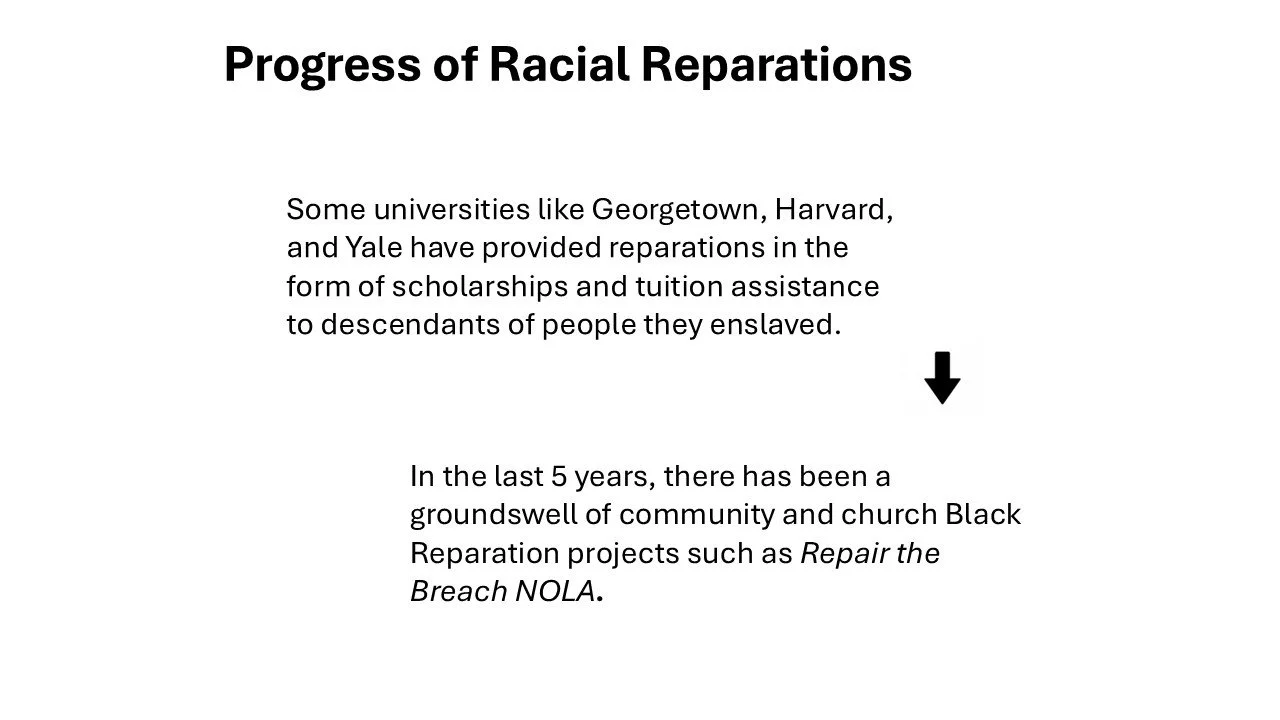
Many churches have an endowment fund created over the years primarily from members’ bequests. That endowment fund is very similar to the “Generational Wealth” that white families have received from their ancestors. Both provide a cushion for families and churches to meet unexpected needs.
The Episcopal Church and the United Church of Christ (UCC) have been leaders in Reparations, both nationally and in local churches. For example, The Episcopal Church passed a resolution in 2006 calling for all Dioceses to document its complicity in the institution of slavery and in the subsequent history of segregation and discrimination. The resolution also required all Dioceses to document various economic benefits that each diocese derived from slavery and its aftermath.
The UCC has also been very active in producing comprehensive materials including the Sacred Reckonings Curriculum. Another UCC curriculum, White Privilege, includes a “white audit” that can be used to measure racial equity in churches and encourage change.
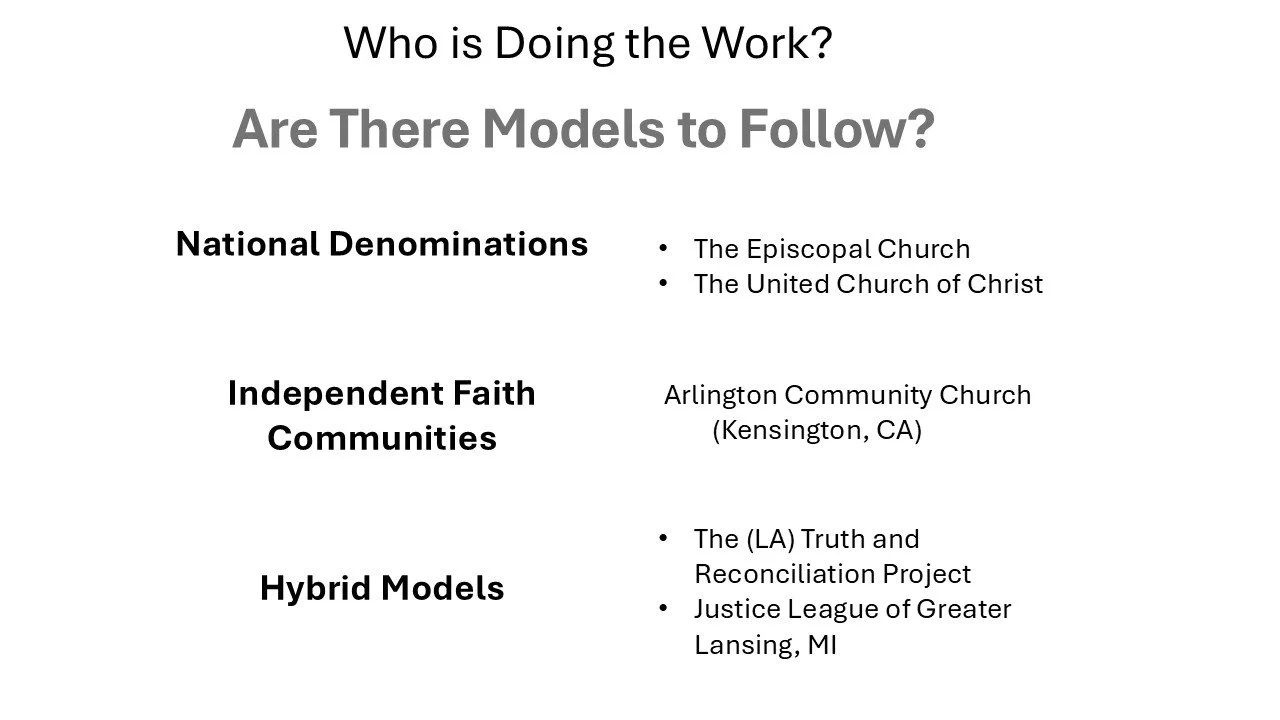
Arlington Community Church in CA took action to rectify lower levels of home ownership among Black residents due to historical redlining (mortgage discrimination) in their area. In 2022, it established the Black Wealth Builders Fund to offer zero-interest down payment loans for Black residents purchasing their first home.
The Truth and Reconciliation Project in New Orleans is financed by a MS couple who has partnered with the LA ACLU to grant $1,000 a month for a year to 12 Black people who have experienced violence from police. During that year, the people also receive supportive services such as counseling, legal, and financial advice.
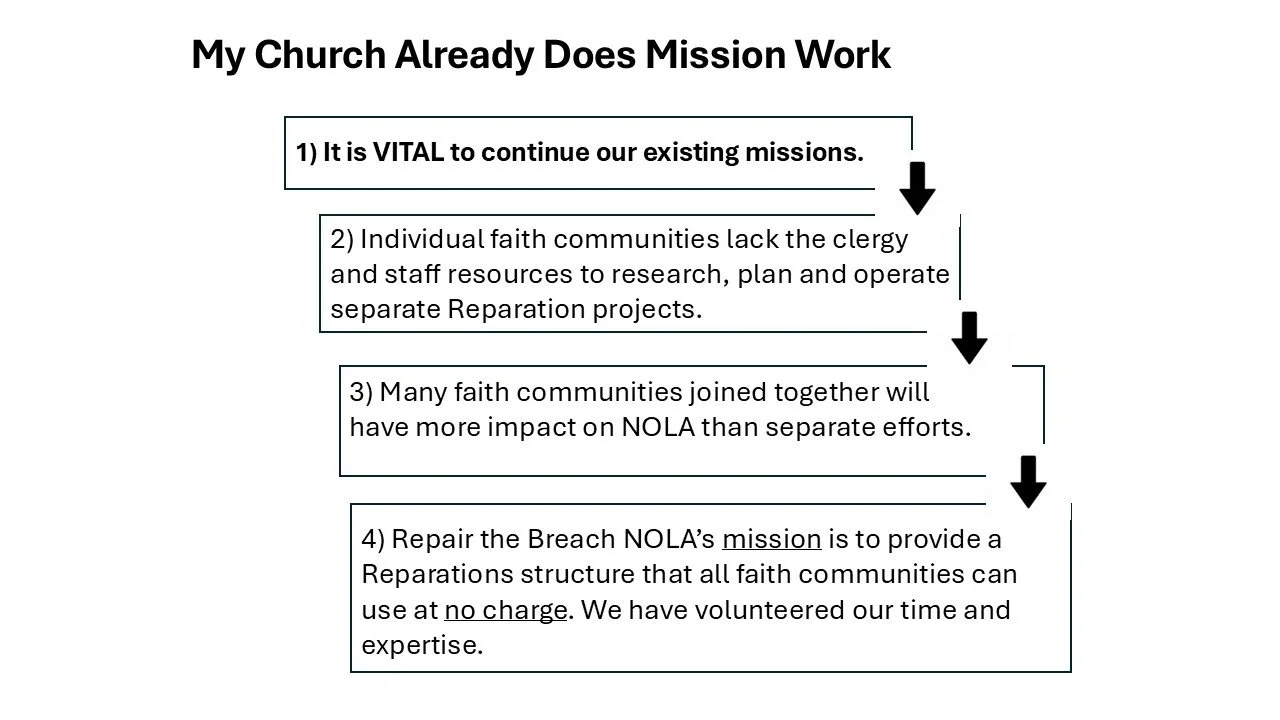
Repair the Breach NOLA has adopted the Justice League's strategy of white churches joining together to create a reparations endowment fund with annual distributions.
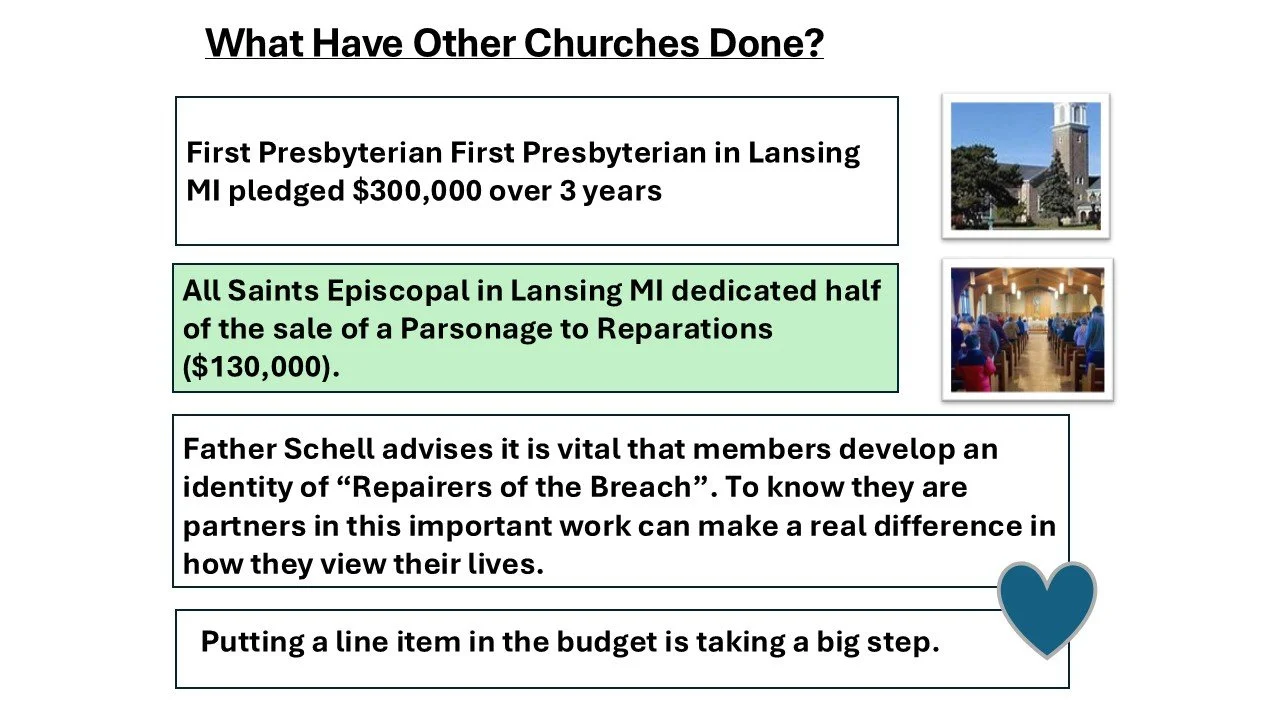
A small out of pocket payment, a gift coming from discretionary funds or a charitable offering made from surpluses can all be surrendered without undertaking substantial personal change.
Deep financial commitments are different. Over time, they change how we think of ourselves. These are Identity statements. They shape the decisions, relationships, and priorities we make.
Any plan for Racial Reconciliation that does not include financial reparations is necessarily insincere.
Here are 6 common objections to Reparations and suggested responses.
You should now be able to answer them!
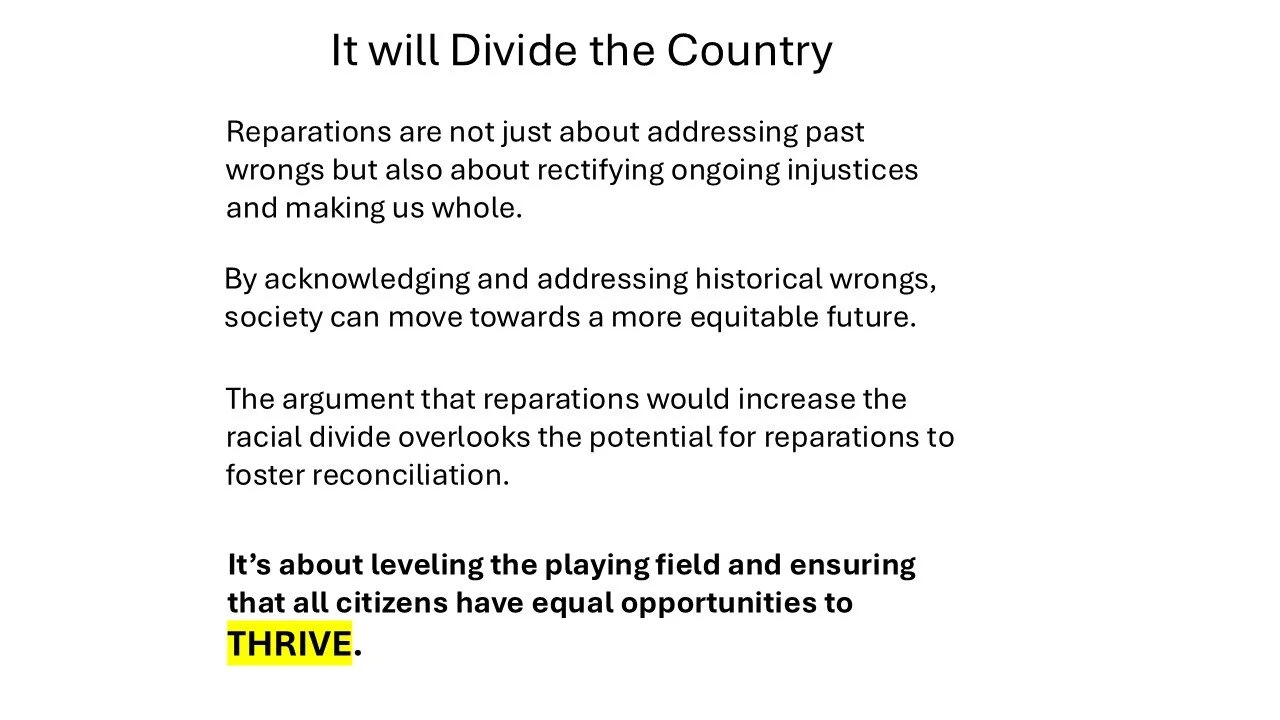
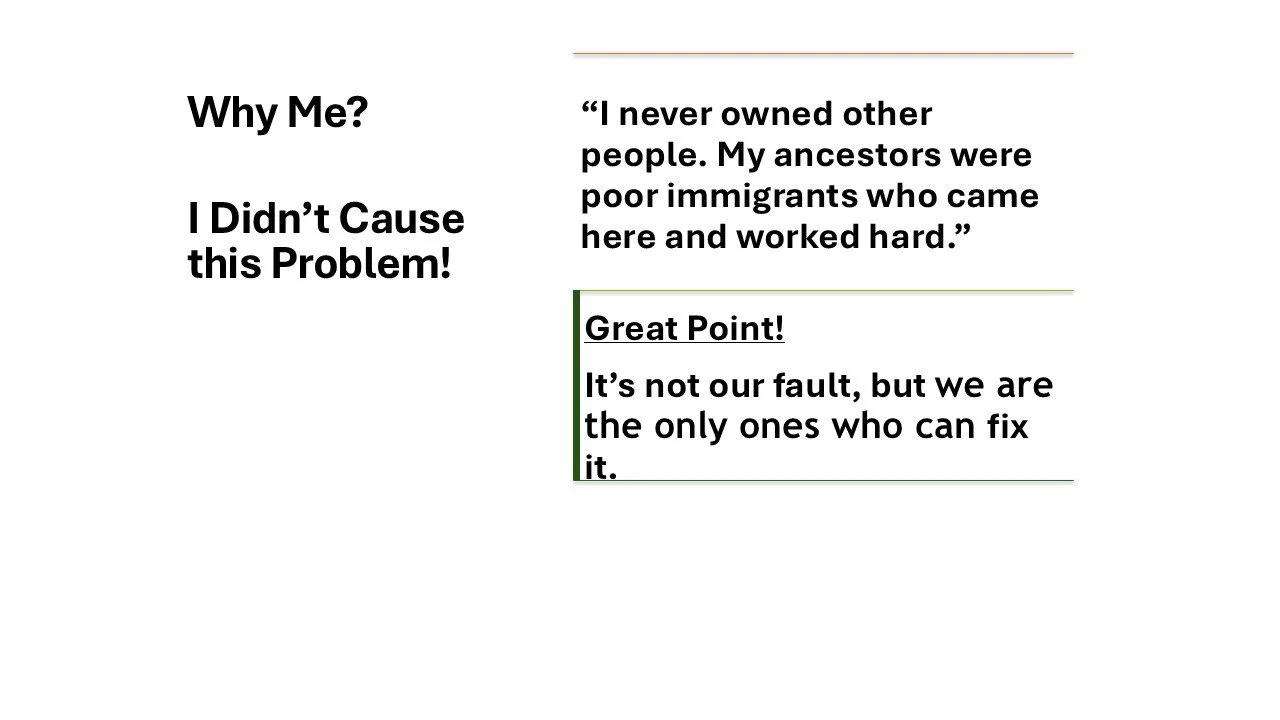
Reparations are about addressing systemic injustices that have been perpetuated over generations. While individuals today did not participate in slavery, we are still benefiting from systems and structures that were built on the exploitation of enslaved people. This concept of collective responsibility is similar to how societies address other historical injustices.
Joel Goza remarked that “Immigrant innocence is often an illusion because slavery was the beginning, not the ending, of the nation’s anti-Black crimes. In these crimes, post-Civil War immigrants were often eager participants. Throughout our nation’s history, no immigrant group consistently stood in solidarity with Black America, for no group desired to be a target of our nation’s racial wrath.”
In her book Caste, Isabel Wilkerson uses an analogy of inheriting an old house that you didn’t build. Errors in construction that aren’t your fault need to be corrected now so you can continue to live there. It’s not your fault, but it is now your responsibility to repair it. As people of faith, who will do it if we don’t?
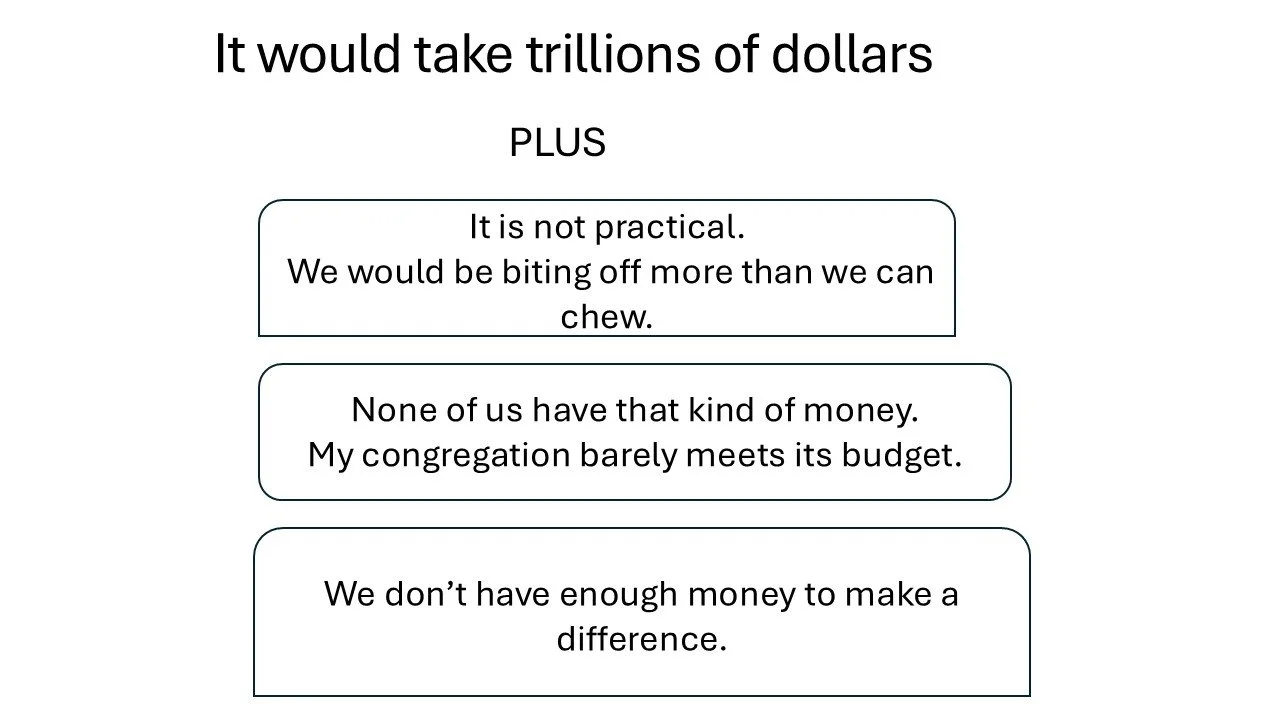
Many objections sound different but relate to our fear of scarcity and our belief that we cannot change things. You will see that churches combining their money can accomplish a lot more together than independently.
It is estimated it would take 13 trillion dollars for complete financial reparations, but that doesn’t mean we should not begin. Previous local projects across the country have empowered local politicians which in turn motivated the Federal Government to take action. Those programs had been too politically controversial until local groups took the first bite of the apple. It is a matter of will. Just look back at all those groups who receive reparations daily.
It was not until 2015 that the British government cleared the national debt after paying out massive reparations to slave owners after slavery was abolished in 1833. [1]
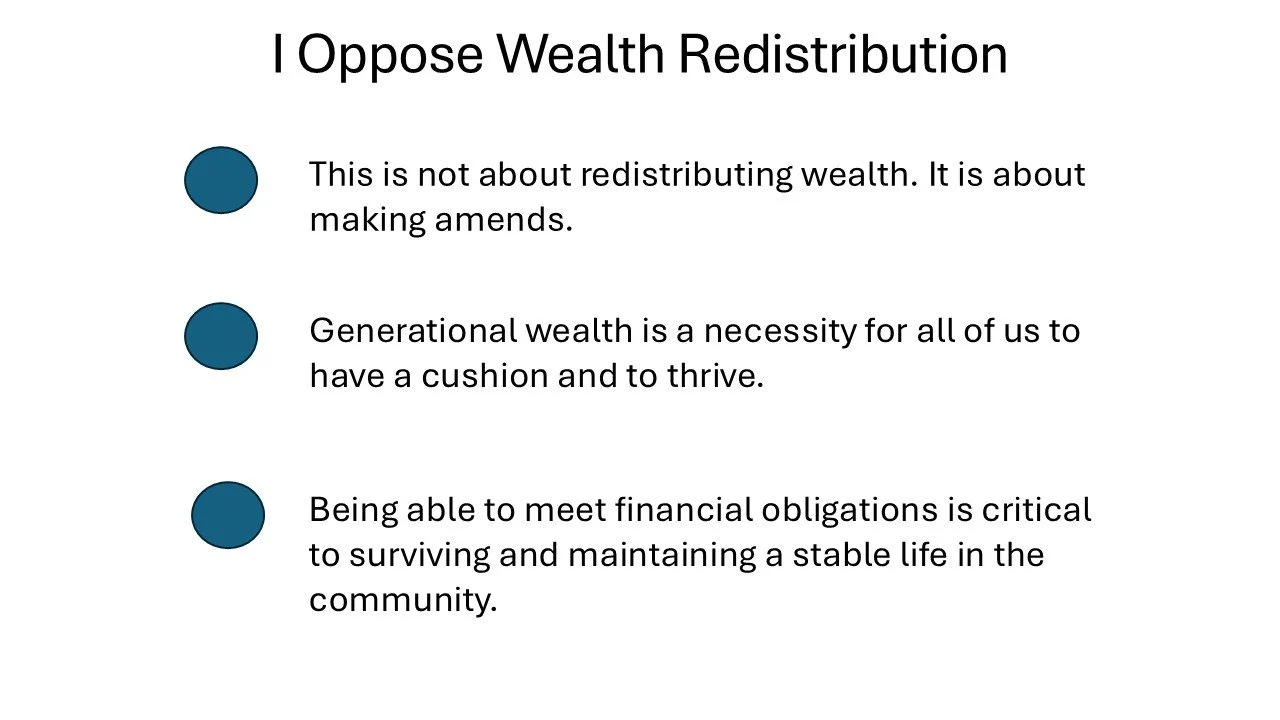
The aim for reparations is justice, not consensus.
The question is not whether racial justice and socioeconomic equality in America are possible.
The question is whether they are desired.