New Orleans Slavery and Racism
Slavery’s Ugly Stain
Though New Orleans was the site of the largest slave market in the Deep South, very little of its dark history has been preserved or remarked on. When New Orleans mayor Mitch Landrieu, in the wake of the White-supremacist rally in Charlottesville, called on New Orleans to remove its Confederate statues, one of the most shocking aspects of his speech was the public acknowledgement that slavery happened at all, Dartmouth College historian and native New Orleanian Rashauna Johnson told the Chronicle of Higher Education.
But between 1804 and 1862, more than 100,000 people were bought and sold in New Orleans, University of Alabama professor Joshua Rothman told the Advocate. Families were torn apart; one third of the sales were of children younger than 13, the Times-Picayune wrote.
Until the addition of the new plaques, one of the only places in downtown New Orleans acknowledging the city’s slave-trading past was a marker in Congo Square, where enslaved people were allowed to drum and dance on Sundays. “Only in New Orleans could the paradigmatic site of slavery be a party,” Johnson wrote in Slavery’s Metropolis, her 2016 book on slavery in New Orleans.
Click here to learn more.
Slavery seems so long ago, but this timeline shows how recent 1865 was . Following 246 years of enslavement, we had 100 years of Jim Crow and segregation. You may think that Black people became full citizens in 1954 with the Brown vs Board of Education decision, but you would be mistaken. Even the U.S. Civil Service which President Woodrow Wilson re-segregated in the 1920’s was not fully integrated until the Civil Rights Movement of the 1960’s.
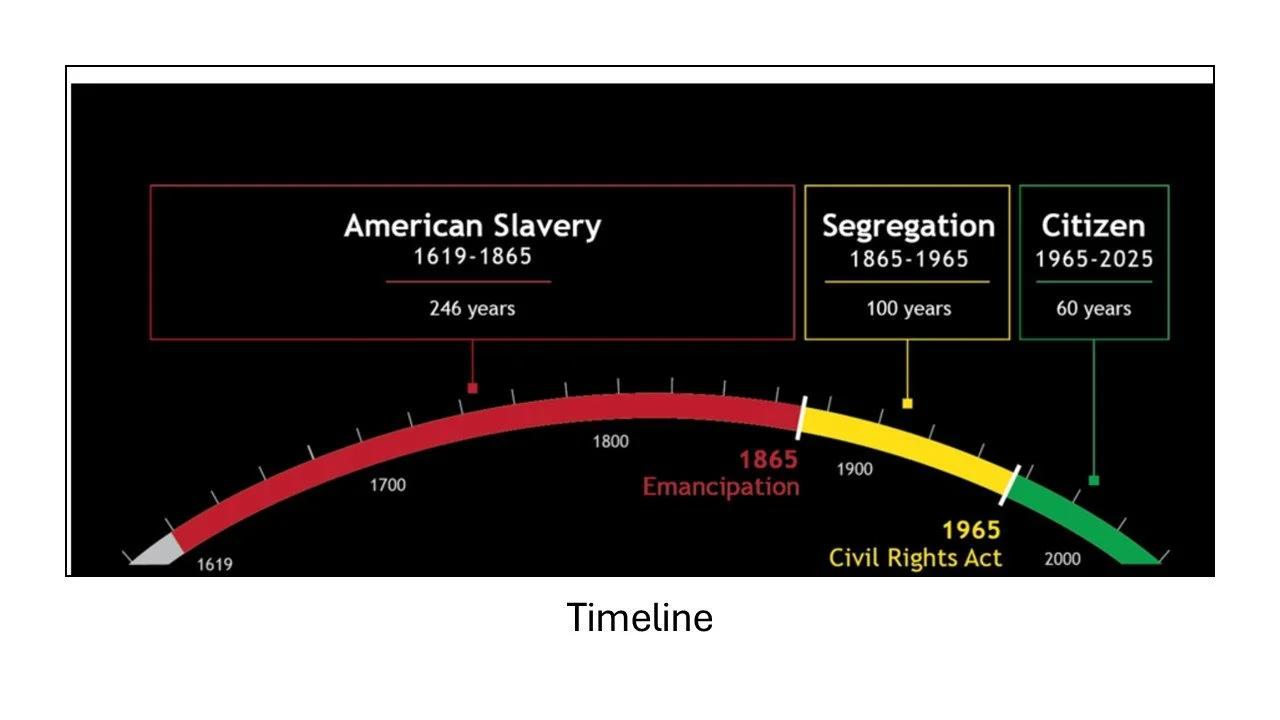
It has only been in the last 60 years that descendants of former slaves have been able to begin acquiring generational wealth. If 1965 seems late to you for true citizenship to begin, remember that the first Black student didn’t graduate from LSU until 1967.
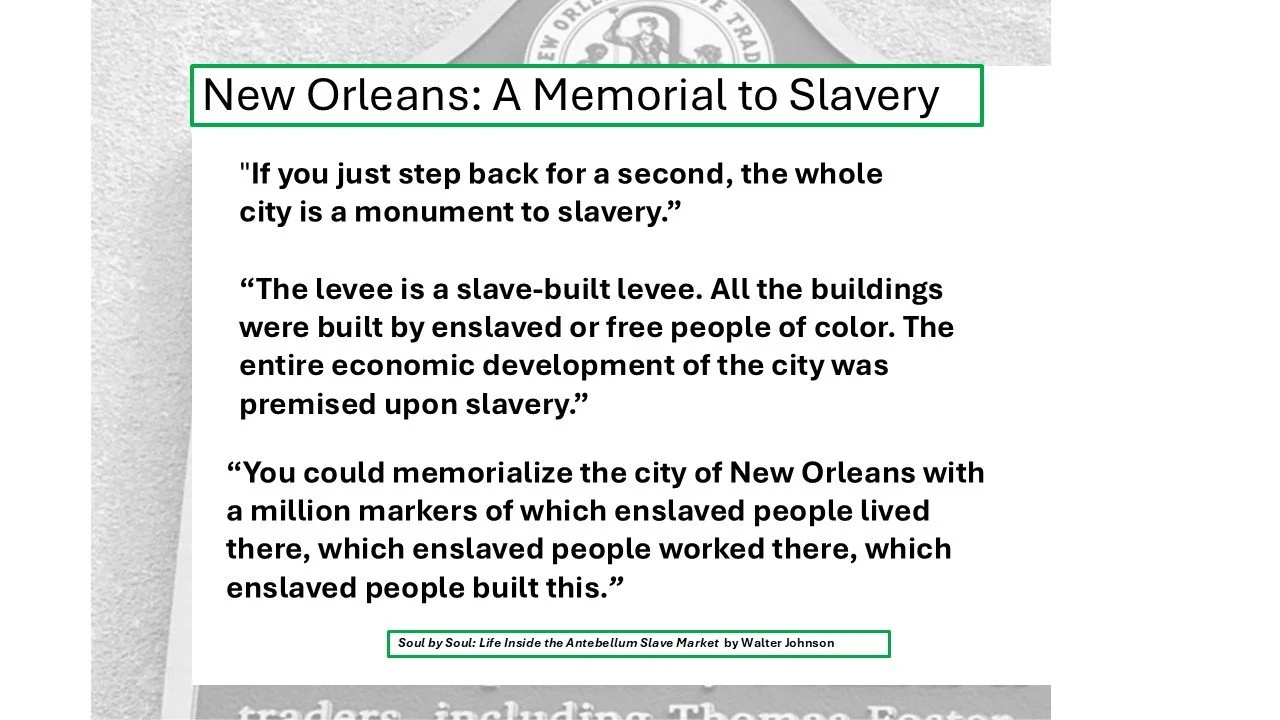
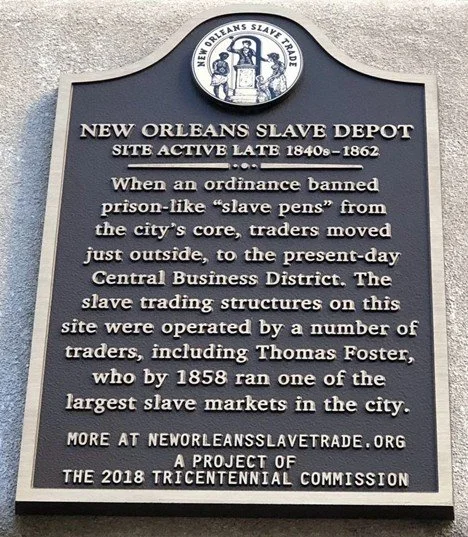
Harvard historian, Walter Johnson describes all of New Orleans as a Memorial to Slavery. It was a hub of slave trade markets. In addition to the ripping apart of families by selling individuals, you may not know that there were Pens where young women were kept to breed. This became even more vital to the slave trade after the Act Prohibiting Importation of Slaves took effect in 1808. Slavery was still legal, but the slaves had to originate in the United States, so Breeding became a big business.
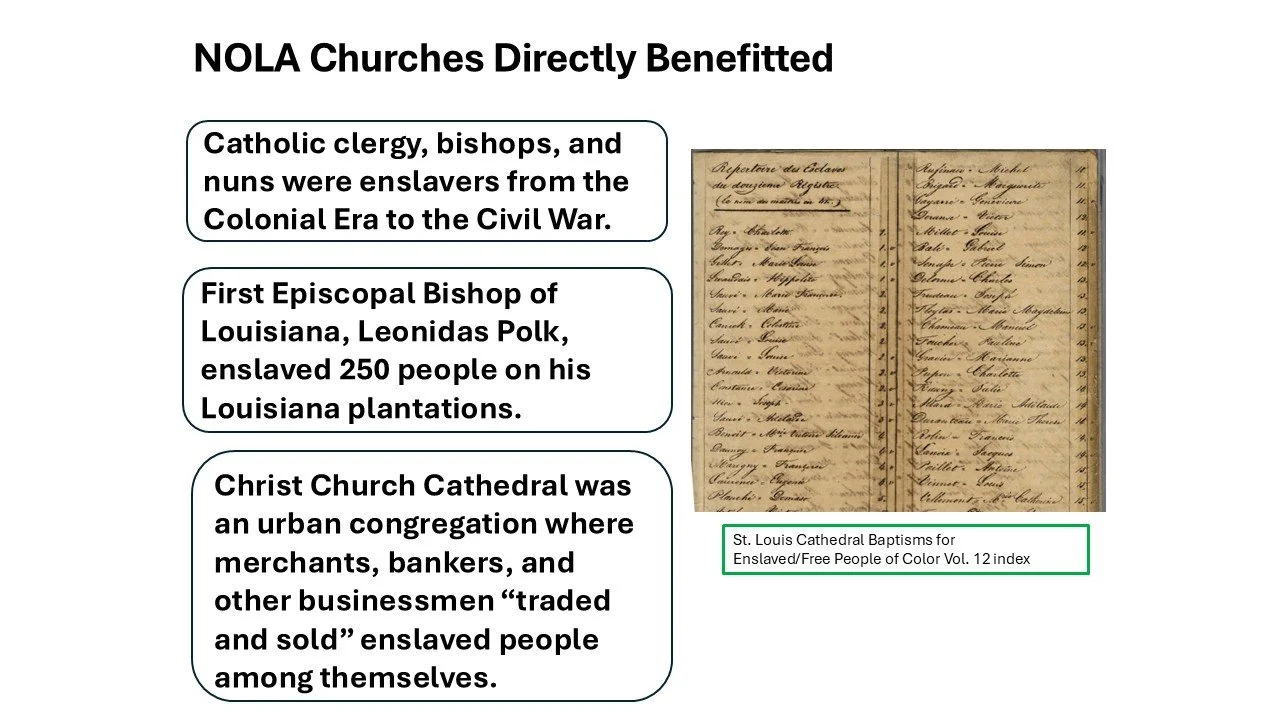
NOLA church communities benefited from slavery. Catholic bishops, clergy, and nuns were all enslavers. Enslaver Leonidas Polk was installed as the first Bishop of the Louisiana Episcopal Diocese in 1841; he owned 250 enslaved people who worked on his plantation. Trinity Episcopal Church recently removed Bishop Polk’s name when it changed Bishop Polk Hall to Bishops Hall. Christ Church (Episcopal) Cathedral congregation included merchants, bankers, and businessmen who traded and sold enslaved people among themselves. The vestrymen bought and sold 2,678 slaves with other members according to Michael E. Goldston's thesis in 2010.
This is a page from St. Louis Catholic Cathedral of Baptisms for enslaved and free people of color.
Historical documents were provided by Sarah Waits, archivist for the Roman Catholic Archdiocese and member of Repair the Breach NOLA.
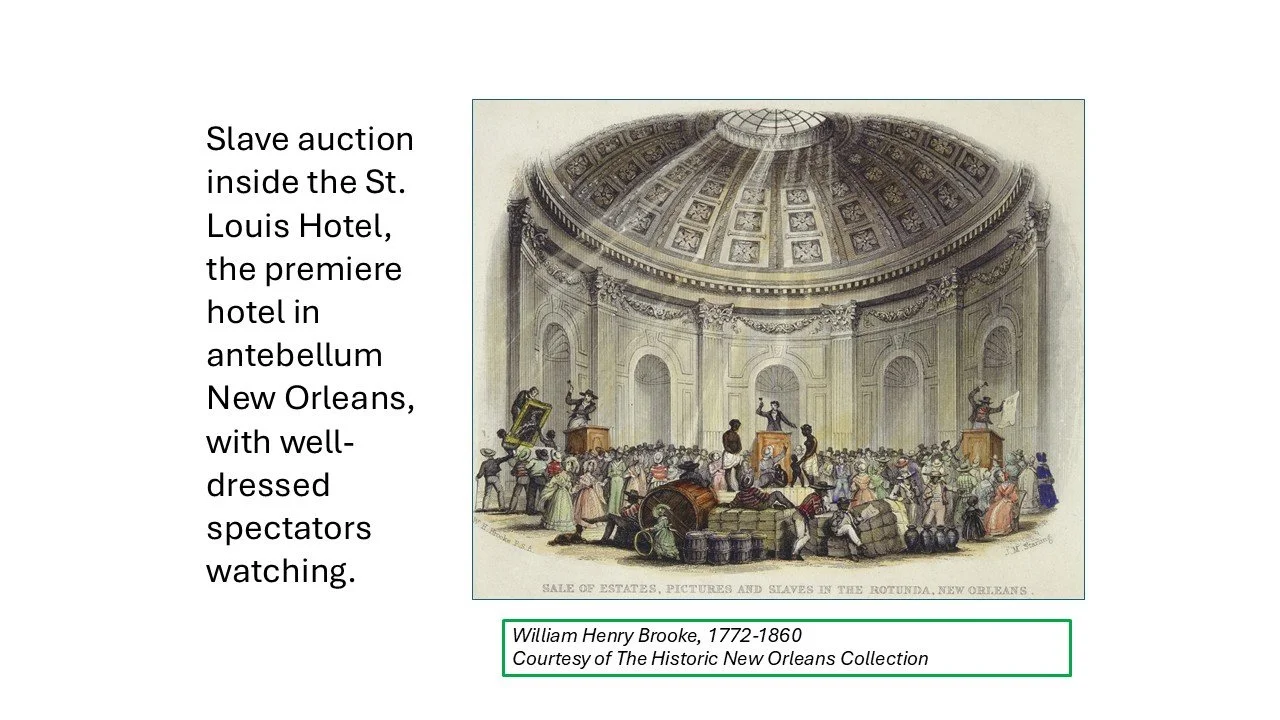
Indoor auctions in New Orleans were primarily for enslaved humans used in urban households. Large auctions for less skilled labor were held outside in Congo Square and around the city. Imagine the profits made every year at this location which was The City Exchange, known for its auctions of people prior to becoming the St. Louis Hotel. This is now the Omni Royal Orleans Hotel across from the LA Supreme Court in the French Quarter.
New Orleans and the Domestic Slave Trade Marker (front side)
In 1808, the US Congress abolished the international slave trade, contributing to a significant increase in the domestic slave trade, or the trafficking of human beings within the boundaries of the United States. During the fifty-seven years that followed, an estimated 2 million men, women, and children were separated from families and forcibly moved by slave traders and owners. The largest numbers were brought from the Upper South to the Lower South via overland and water routes.
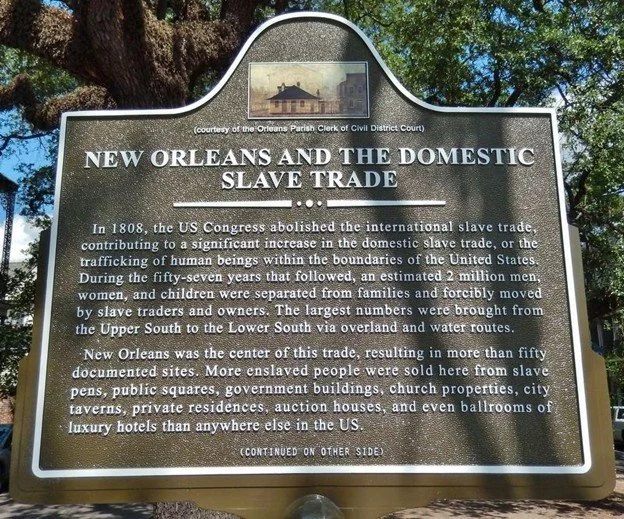
New Orleans was the center of this trade, resulting in more than fifty documented sites. More enslaved people were sold here from slave pens, public squares, government buildings, church properties, city taverns, private residences, auction houses, and even ballrooms of luxury hotels than anywhere else in the US.
New Orleans and the Domestic Slave Trade Marker (back side)
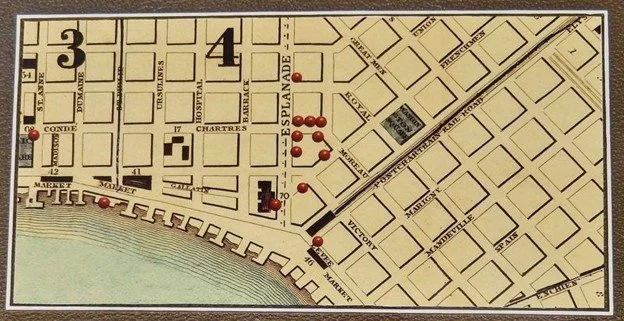
Within a one-block radius of this marker were the New Orleans offices, showrooms, and slave pens of over a dozen slave trading firms, including Franklin, Armfield, and Ballard, Hope Hull Slatter, John Hagan, Joseph Bruin, and others. Their networks, which undergirded the antebellum economy, stretched from Norfolk, Baltimore, Louisville, and Memphis to New Orleans, Natchez, Galveston, Pensacola, and beyond.
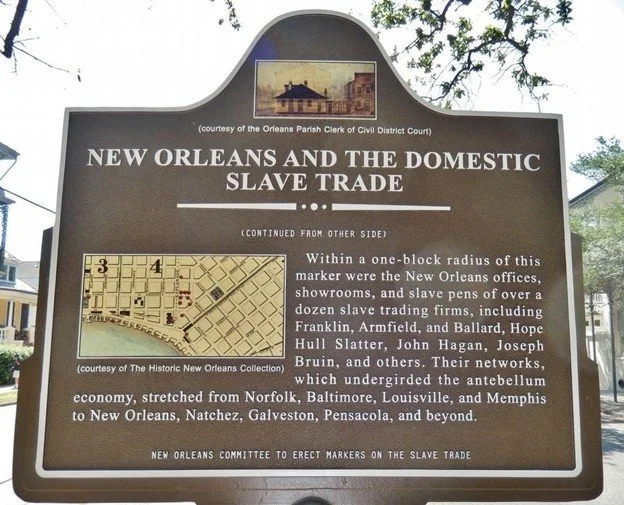
New Orleans map of nearby offices, showrooms, and slave pens of over a dozen slave trading firms
An 1849 map shows more than 50 slave markets all around the city. An engraving depicts a slave auction being held in the rotunda of the St. Louis Hotel, which occupied the French Quarter site where the Omni Royal Orleans Hotel stands. A ship's manifest showing slaves bound for New Orleans includes Plat Hamilton, the new name given to Solomon Northup, who had been kidnapped and sold into bondage. His memoir, "12 Years a Slave," was the basis of an Oscar-winning movie. (Submitted on May 11, 2018, by Cosmos Mariner of Cape Canaveral, Florida.)
Racism Continues To This Day
Black and Brown families, on average, start out with less generational wealth, face higher insurance premiums, and experience greater barriers to affordable homeownership. Acknowledging these facts isn’t about blaming anyone. It’s about understanding the full picture so we can work toward real solutions that lift everyone, not just a select few. Ignoring these realities won’t make them disappear. It will only deepen the divides that hurt our city, our economy, and our collective future.
The legacy of systemic injustice isn’t just visible in housing or wealth gaps. It’s still shaping how young people of color are treated today, with Louisiana continuing to spend millions on youth incarceration rather than investing in real community support.
When Black and Brown communities are locked out of opportunity, all of New Orleans suffers. Poverty and crime rise, and social trust erodes.
Progress has been made, but it’s a mistake to think that a few generations can erase the impact of centuries of discrimination. We are still living with the remnants. And if we refuse to face that fact, we are setting ourselves up to repeat history rather than build a better one.
From “Big Easy Magazine” (April 27, 2025). Click here to learn more.
In the image below, the news story on the left is about the new Algiers Methodist Church being dedicated in 1922. The sub-title is “Donation of $100 Received from Ku Klux Klan. Sarah Waits led that church several years ago in adding a Reparation Line to their annual budgets.
Two years later, the article on the right reports that seven members of the KKK attired in their regalia marched to seats in the front row of the opening services at the new First Baptist church of Algiers. An estimated 500 persons were inside the building and almost as many more were on the outside. One of their number started to nail a plaque on the pulpit when the pastor, the Rev. B.E. Massey, interrupted him and said: “I must know something about what you stand for before you proceed further.
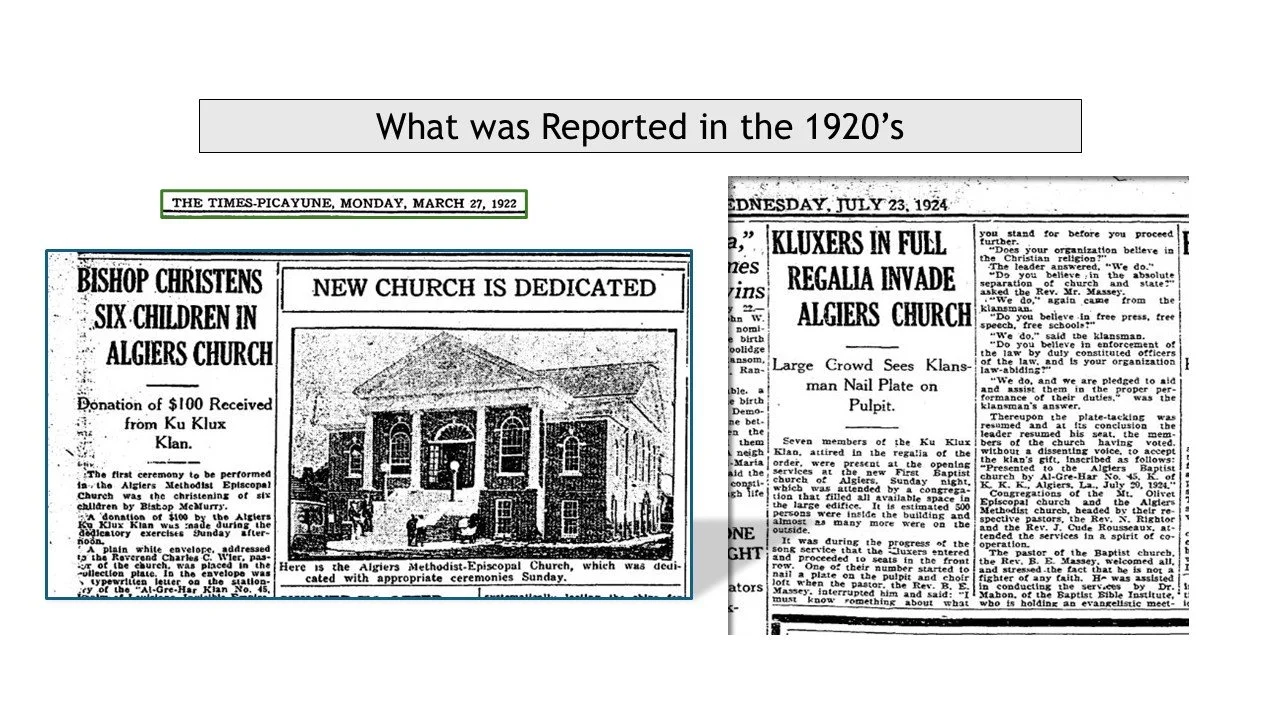
Does your organization believe in the Christian religion? The leader answered “We do”. Do you believe in the absolute separation of church and state?
Do you believe in free press, free speech, free schools? Do you believe in enforcement of the law by duly constituted officers of the law, and is your organization law-abiding? “We do and we are pledged to aid and assist them in the proper performance of their duties” was the klansman’s answer.
Without a dissenting voice, the members of the church voted to accept the Klan’s gift. In a spirit of cooperation, congregations of the Mt Olivet Episcopal church and the Algiers Methodist church headed by their pastors attended the services. The pastor of the Baptist church, the Rev B E Massey was assisted in conducting the services by Dr. Mahon, of the Baptist Bible Institute, who was holding an evangelistic meeting.
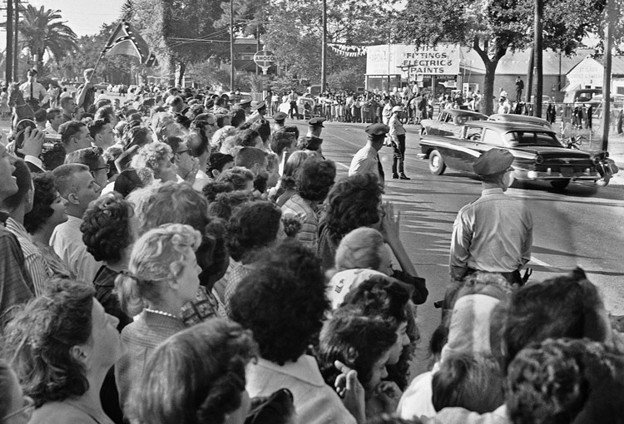
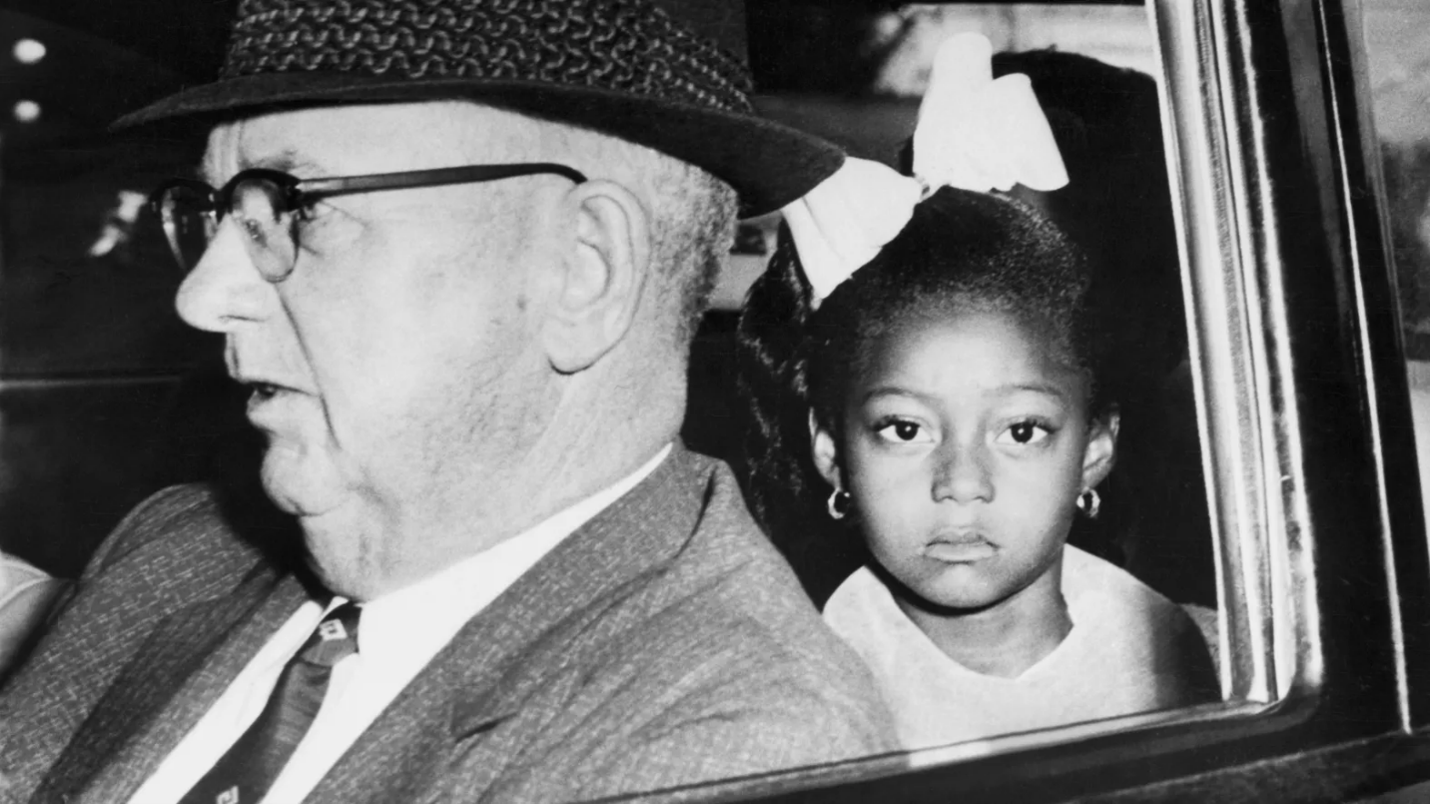
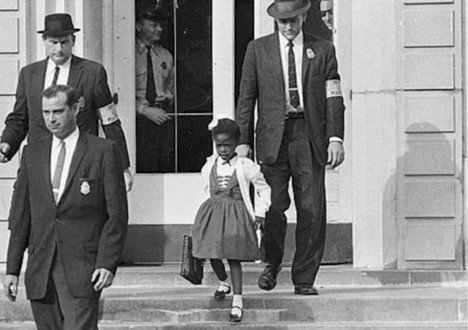
These November 14, 1960, photos document the harassment, danger, and federal protection required for first graders Leona Tate, Gail Etienne, Tessie Prevost, and Ruby Bridges as they integrated New Orleans public schools in 1960. Police on horseback held back white crowds with Confederate flags as they screamed, jeered, and yelled racial slurs and death threats at the 6-year-old girls.
This is not ancient history.
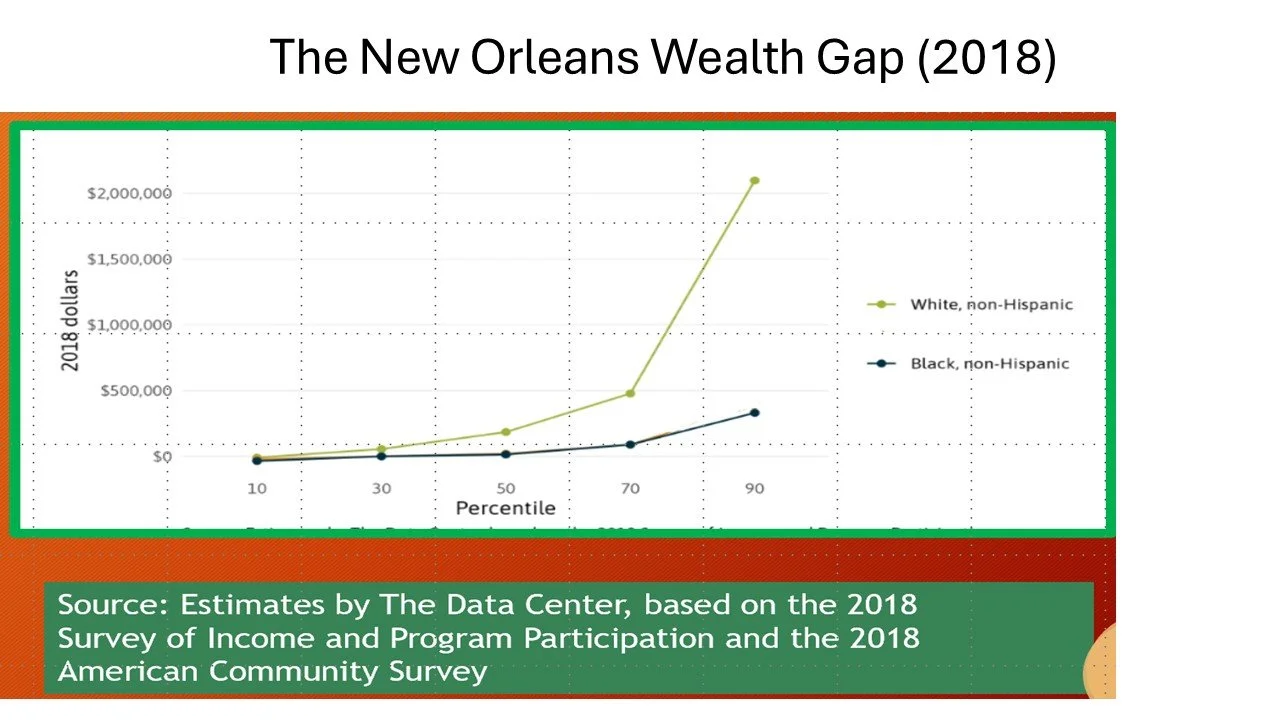
The US has the most unequal distribution of wealth in the developed nations. 30% of White families have greater than $500,000 while less than 5% of Black families do. The bottom 20% of Whites have $24,000 vs $54 for Blacks.
The average wealth in NOLA: White $185,000 vs Black $14,000.
According to Rev Peter Jarrett-Schell, “To say that Black communities have suffered unjust hardship is only half the story. White communities have unjustly enriched themselves through the unjust deprivation of Black communities. Our wealth is built upon the backs of others”.
The statistics below are current and were taken from a 2026 WWL-TV documentary Follow the Line: A one-hour investigative documentary exploring the history of segregation, neighborhood disparities, and the wealth gap in New Orleans. The Garden District is a primarily White wealthy area with large lots, well-kept city parks and a public library. That kind of wealth is self-perpetuating. Central City and the Garden District are separated by St. Charles Avenue.
The peak core construction era in the Garden District fell entirely within the antebellum slavery period from1840-1890s. Enslaved skilled tradespeople provided the overwhelming majority of the hands-on construction labor for those grand homes. Enslavers rented skilled enslaved workers (ironworkers, bricklayers, and plasterers) by the day, week or season. The enslaver collected the wages; the enslaved person received nothing. Following emancipation, freedmen made up a large share of the building trades workforce as nominally paid laborers under exploitative wage conditions shaped by Black Codes and Jim Crow restrictions. The Garden District has been listed in the National Register Historic District since 1971.
Core housing construction in Central City was from 1850-1915 with an infill wave from 1930's-1960s. Irish and German immigrants settled the swampy backstreets and built housing for themselves from the 1830s-1850s according to the Preservation Resource Center of New Orleans. Later Italian immigrants and Eastern European Jews joined the mix of residents and workers along with Black laborers and freedmen. In short, Central City was built by its own residents. Federal construction programs including public housing authorities were responsible for the later infill wave.
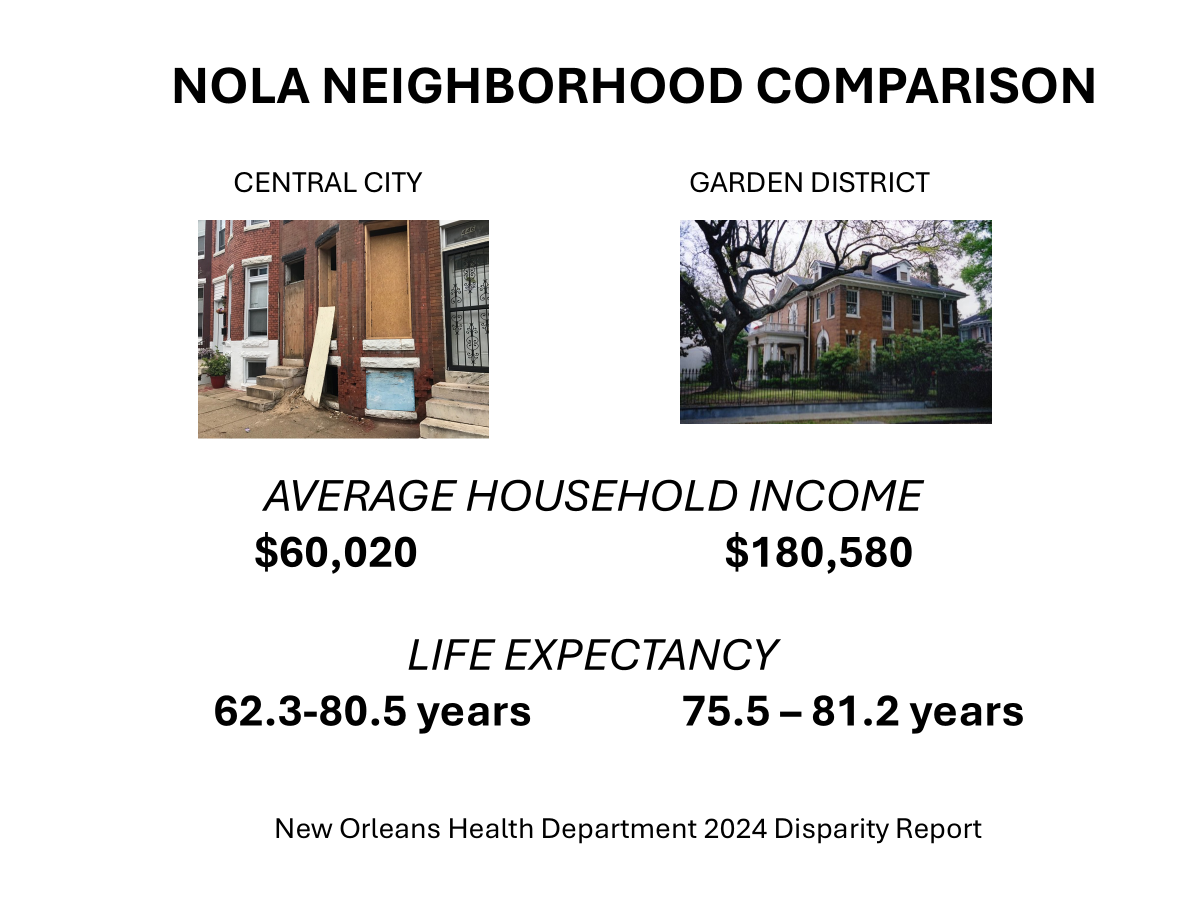
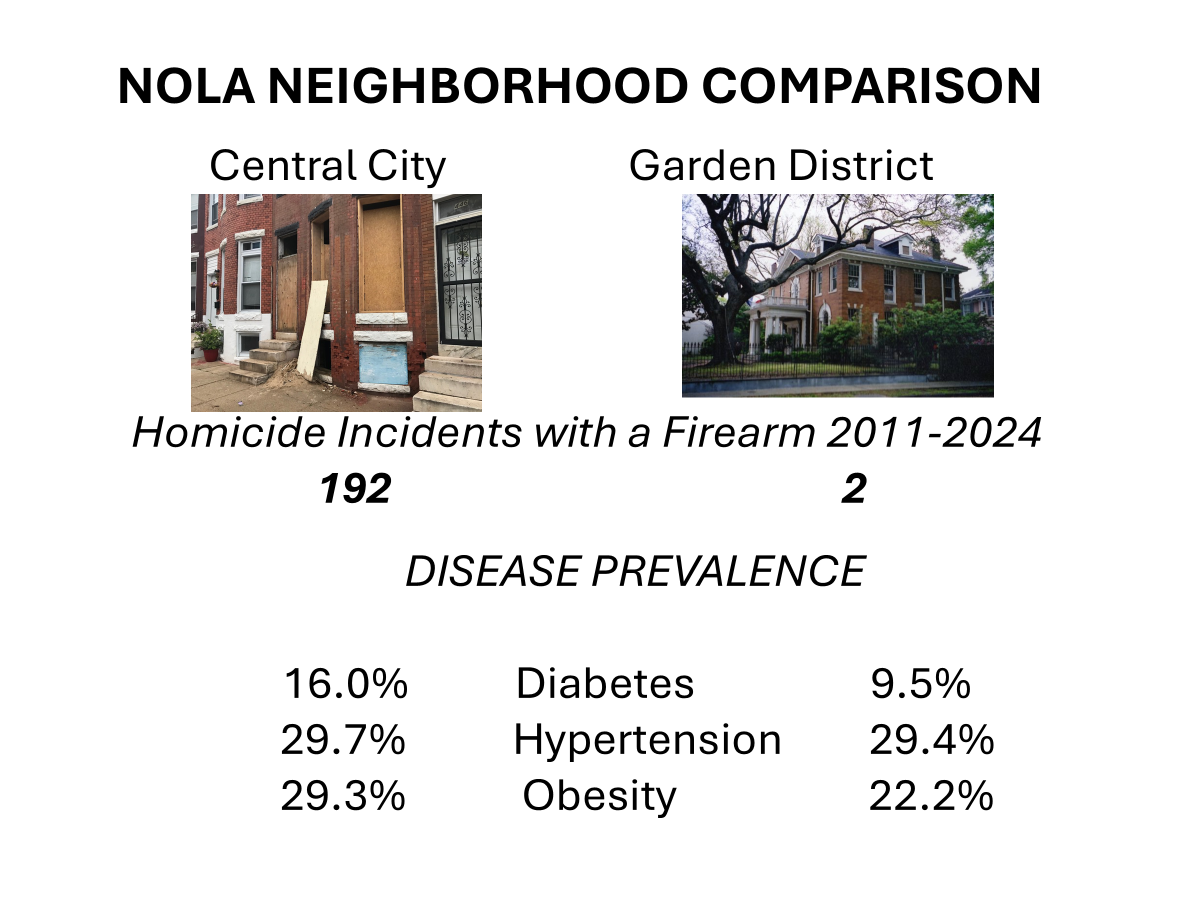
It cannot be forgotten that poor neighborhoods do not have access to good schools, grocery stores with fresh produce, and other factors that lead to good health. More homicides occur in Central City and fewer people are insured for preventive care. Thus, it is not surprising that the statistics above are so different for two historically segregated neighborhoods.
New Orleans poorer Black neighborhoods were impacted by 2005 Hurricane Katrina in unseen ways. The Road Home project was established with federal and state funding to assist evacuated citizens to return and rebuild their homes. Grants were awarded based only on the assessment of destroyed homes prior to the storm. No accommodation was made in the awards that acknowledged the cost of basic building materials is the same per foot whether the home is rebuilt in a wealthy or a poor area. As a result many families in poorer segregated neighborhoods were unable to rebuild their homes.